
Bicycle · Moving preparation
Moving a bicycle: prepare dimensions, accessories and handover
A bicycle needs its own entry on your moving inventory. Clarify transport condition, access and accessories before the team reaches the basement door.
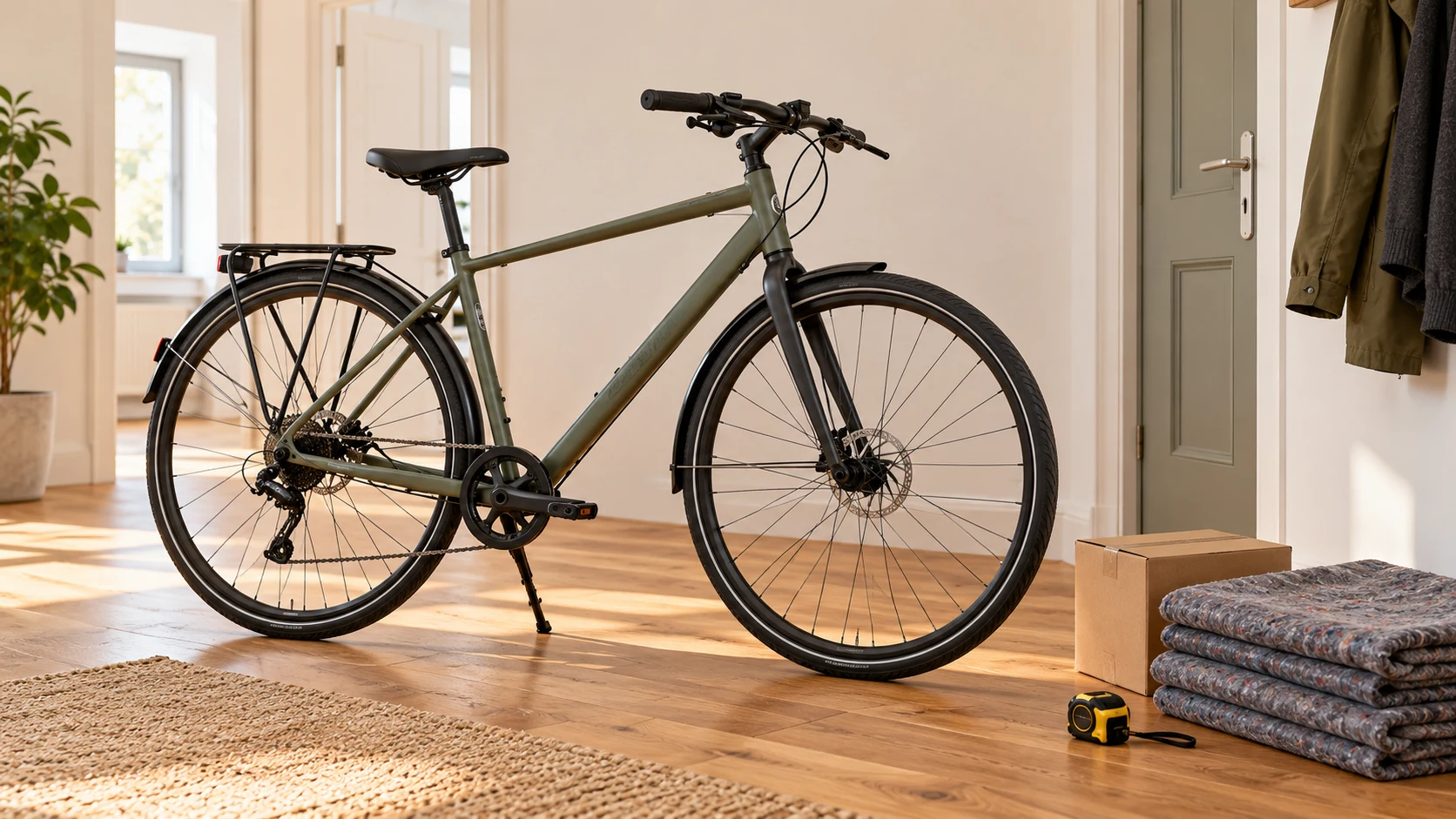
1. Record the bicycle as a separate item
A bicycle in the basement is easy to miss on a moving inventory. List each bike individually: make and model, type, approximate weight and condition. A cargo bike, a child’s bicycle and an ordinary city bike need different amounts of space and carrying arrangements. Say whether it can be wheeled or must be carried.
Photograph its current condition for your records and note existing damage. Frame numbers, keys and purchase documents belong in your private records, not on a publicly visible box. These details support identification and an organised handover.
2. Measure the bicycle and its route out of the basement
Measure length, height and greatest width in the intended transport condition. A wide handlebar or fitted basket may matter more than tyre width. If packaging is planned, the provider needs the outside dimensions of the finished unit. Mark estimates as still requiring verification.
Describe the actual access: basement stairs, a tight turn, doorway width, lift and route to the vehicle. Agree who opens the basement and whether a shared bicycle room has access restrictions. Include the intended storage place at the destination; the kerb is not the same as an agreed basement room.
3. Agree preparation and packing before moving day
Agree with the carrier whether the bicycle will be collected assembled or needs professional preparation. Do not dismantle it pre-emptively using an arbitrary online list. Wheels, handlebars and brakes may have model-specific requirements. This guide therefore provides no dismantling, assembly or tie-down procedure.
Trek’s manual points to appropriate transport packaging and model-specific reassembly, with help from a bicycle shop when uncertain. Manufacturer guidance does not replace your agreement with the moving company. Record who supplies materials, who packs and the condition in which the bicycle will be handed over.
4. Keep accessories linked to the correct bicycle
List removable bags, lock, pump and other accessories separately. Remove loose personal belongings. Agree which items may stay fitted and which need separate protection as part of the transport preparation. A child seat or trailer must also appear explicitly in the inventory.
Use a simple association, such as B-01 for the bicycle and B-01-A for the accessory box. Record the box’s contents and destination room. This is an organisational example, not a prescribed package count. Keep the key accessible so the bicycle can be unlocked for collection.
5. Ask separately about e-bikes and unusual designs
For an e-bike, disclose the drive system, battery model and known condition in advance. Agreement to carry an ordinary bicycle does not automatically confirm acceptance of a battery. Ask the intended provider or specialist to clarify manufacturer documentation, transport arrangements and acceptance conditions. Do not open or repair the battery for the move.
A suspicious or damaged battery is not promised ordinary carriage. This guide does not cover dangerous-goods shipping or disposal. Apply the same planning principle to special frames, cargo structures or customised fittings: identify them early and obtain confirmation of suitable preparation.
6. Separate completeness from readiness to ride
At handover, compare the bicycle, accessories and visible condition with your inventory. Document discrepancies and clarify them with your contractual provider. Put the bicycle in the agreed safe location rather than leaving it in a walking route between moving boxes.
Before the next ride, follow the checks in the bicycle’s own manual. Arrival of every part does not, on its own, make a transported bicycle ready to ride. Have uncertain assembly or damage assessed professionally before use. A moving job does not automatically include a bicycle inspection.
7. Send an enquiry with a clear service scope
Umzughilfen is a marketing and referral service based in Idstein for moving enquiries in the Rhine-Main region. State the number and type of bicycles, dimensions, access, accessories and requested preparation. Send photos through the channel agreed with the named contact; the enquiry form has no file upload.
The independent partner is identified before you place an order. The quotation, contract, work, invoice and payment are directly with that company. Explicitly agree packing, carrying, transport and any professional preparation. Umzughilfen retains its own referral and data-protection obligations. An enquiry is not a booking.
Questions about moving a bicycle
Must I dismantle the bicycle?
That depends on the model, access and agreed transport. Confirm the necessary preparation rather than removing parts pre-emptively.
Is an e-bike battery automatically included?
No. Disclose the system, battery model and condition in advance and explicitly clarify acceptance conditions.
Who makes the bicycle ready to ride after the move?
Agree any necessary assembly or professional check separately. Arrival of every part does not replace a pre-ride inspection.
Sources and notes
Trek owner’s manual, transport and maintenance sections, checked on 1 November 2026. Manufacturer guidance is model-specific; this editorial checklist is not a packing standard or a promise to accept batteries. No manufacturer partnership.