
A new home for you and your pet
Moving with pets: plan the journey and settling in
A move with a pet needs its own plan alongside the furniture and boxes. Decide who will look after the animal during loading, how the journey will work, and what will be ready at the destination. This guide covers planning a move within Germany; discuss individual health questions with your veterinary practice.
1. Make a separate plan for the animal
Write down two schedules: the moving team’s work and the animal’s care. They meet at a few points, including leaving the old home and entering the prepared space at the destination. Someone carrying furniture or directing the driver at that moment cannot give their full attention to the animal.
Based in Idstein, Umzughilfen.de refers independent partners for home moves and transport in the Rhine-Main area and further afield subject to confirmed availability. This does not automatically book pet care or animal transport. Agree the furniture work directly with the identified business and arrange your pet’s care separately.
| Task | Agree in advance | If there is a delay |
|---|---|---|
| Care | Name, contact number and handover to a replacement. | The person stays responsible until another explicitly takes over. |
| Journey | Vehicle, departure and access at the destination. | Extend the stay before departure rather than wait for furniture in the vehicle. |
| Arrival space | Who prepares it and who holds the key. | Arrive after access is confirmed. |
| Furniture work | The rooms and routes the team will use. | Agree changes with the moving business and the person caring for the pet. |
2. Discuss the journey and care before packing
Ask your veterinary practice early what this particular journey requires for your pet, especially with existing illness or known travel difficulties. Discuss transport, feeding and prescribed medication specifically. A general packing list cannot make those individual decisions.
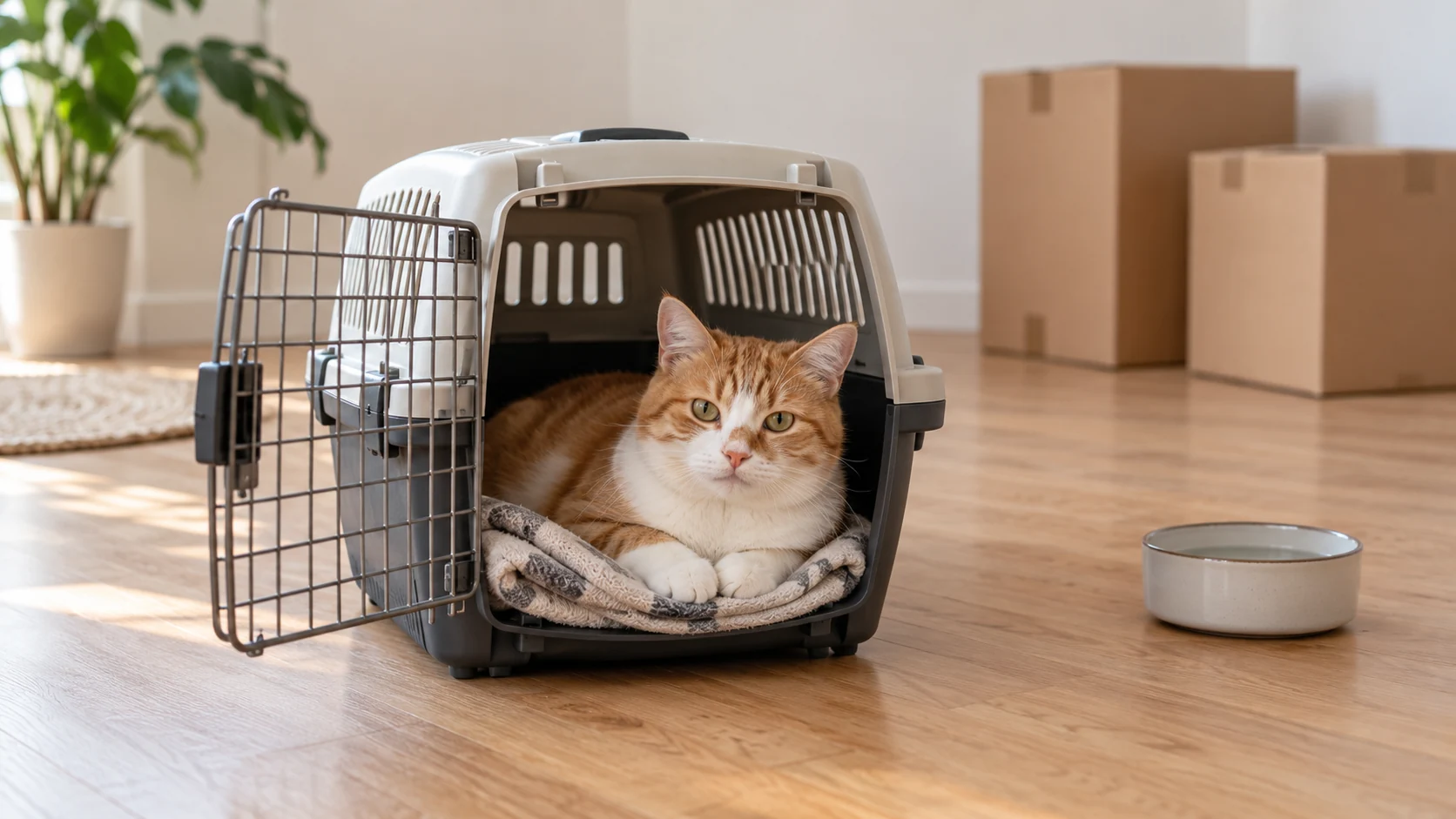
Germany’s Federal Chamber of Veterinarians recommends familiarising cats with the carrier in advance. Calming medication belongs in a discussion with the vet. Do not try a new product on your own initiative on moving day.
- Check the vehicle and how the carrier or other suitable restraint will be secured before departure.
- Keep familiar equipment, care supplies and existing veterinary records within reach.
- Note the local veterinary practice and emergency veterinary service near the new home in advance.
- Confirm collection and handover with the person providing care.
3. Assign responsibility during loading
TASSO suggests a familiar carer as one option for a dog on moving day. If the dog remains at home, one person should focus specifically on it. For cats, TASSO describes a separate closed room when suitable care elsewhere is not possible.
Before work starts, tell the moving team which room stays outside their work route and who may open its door. A door notice supports the agreement; it does not replace it. Keep the responsible person reachable, including if the team arrives earlier than expected.
An organisational example: once the keys are handed over, someone confirms that the destination space is ready, then agrees the animal’s arrival with its carer. Whether this order suits your pet depends on the care arrangement, journey and access. Times in a sample schedule cannot guarantee that it will work.
- Tell the team where the animal will stay and who is responsible.
- Confirm the care arrangement before the first loading task and when changing homes.
- Keep care supplies and animal records out of the general box load.
4. Arrange travel independently of the furniture load
Confirm with the driver where the animal will travel and how a suitable carrier or other appropriate restraint will be secured. Boxes must not obstruct the carrier. A furniture-transport quote does not answer these questions.
The Federal Chamber of Veterinarians highlights ventilation, drinking water and breaks for longer car journeys. Agree how any waiting at the destination will be handled too. Do not leave your dog in a parked car in warm weather. Suspected heatstroke requires immediate veterinary help, even after apparent recovery.
If you book a separate animal-transport service, confirm the transport arrangement, responsibility, collection and handover locations, and agreed scope. Discuss health requirements with your vet. A border crossing needs a separate check of the destination country’s current rules and the transport operator’s conditions.
5. Plan arrival differently for cats, dogs and other pets
Decide who takes over care at the destination and where the equipment will be ready. Put this handover in the same schedule as the keys and furniture deliveries. The animal’s care should not depend on finding the last box.
For cats, TASSO recommends several weeks without outdoor access after a move; its moving guide specifies at least a month. This is not an automatic release date. Discuss the individual animal and the new surroundings with your veterinary practice.
For dogs, TASSO recommends building up time alone again gradually in the new home. For small pets, it recommends retaining familiar enclosure furnishings. Birds, reptiles, fish and animals with particular housing requirements need a plan appropriate to their species.
| Animal | Record in the arrival plan | Discuss separately |
|---|---|---|
| Cat | Prepared space and responsible person. | Settling in and any later outdoor access. |
| Dog | Companionship, familiar bed and daily routine. | How to build up absences again. |
| Small pets | Place for the enclosure and existing equipment. | Transport and care for that species. |
| Other species | Who prepares the required living conditions. | Transport plan with a vet or relevant specialist. |
6. Update registration details and reachable contacts
TASSO asks registered owners to update changed addresses and telephone numbers promptly. A microchip does not update contact details. Check the register you actually use and make sure you can answer the recorded number on moving day.
Also note your new local practice, the carer and where the animal’s records are kept. For local dog registration and Hundesteuer, contact the municipality responsible. Moving home does not complete those processes for you.
7. Check the handovers before departure
Use the table as your own task sheet. Add names and the actual readiness status. A confirmed furniture booking is not enough while care or access for the animal remains unresolved.
When the timetable changes, first reconfirm care, travel and destination access. Then adjust the affected furniture arrangements with the business doing the work. This avoids silently assigning an extra task to someone who has not agreed to it.
| When | Confirm | Name / status |
|---|---|---|
| Before work starts | Carer and place for the animal to stay. | ________________ |
| Before departure | Vehicle, restraint and reachable care supplies. | ________________ |
| Before arrival | Key, prepared space and person taking over. | ________________ |
| First evening | Equipment, records and reachable contacts. | ________________ |
| After the move | Contact details in the animal register checked. | ________________ |
Questions about moving with pets
Will the furniture company automatically take my pet?
A furniture and box booking does not automatically include animal transport or care. Arrange these tasks separately and expressly confirm any additional service offered.
Who looks after the pet if everyone helps with loading?
Choose someone who is not needed for carrying or directing the loading during that time. Responsibility must be explicitly handed over when that person changes.
When can my cat go outside again?
TASSO’s moving guide recommends at least a month without outdoor access. Discuss the actual timing and suitable surroundings with your vet; a calendar date alone does not decide it.
Can I give a calming medicine before the journey?
Discuss the product and dose with your veterinary practice. Do not give a new product on your own initiative on moving day.
Does this plan cover an international move?
The allocation of tasks remains useful. Documents, entry conditions and transport rules need a separate current check for the country, species and particular journey.
Sources and scope
Checked on 11 October 2026: TASSO on moves with cats, dogs and small pets, and register details; the Federal Chamber of Veterinarians on carriers, medication advice and heatstroke. The schedules and handover tables are editorial planning tools. This guide does not replace individual veterinary advice. Linked sources are in German.