
Packing & supplies
First-night moving box: what to keep within reach
On arrival, you need access to the home, a meal, a usable bathroom and somewhere ready to sleep. You do not need to unpack the entire household that evening. Work backwards from bedtime and the next morning, keeping the things needed for those routines easy to find.
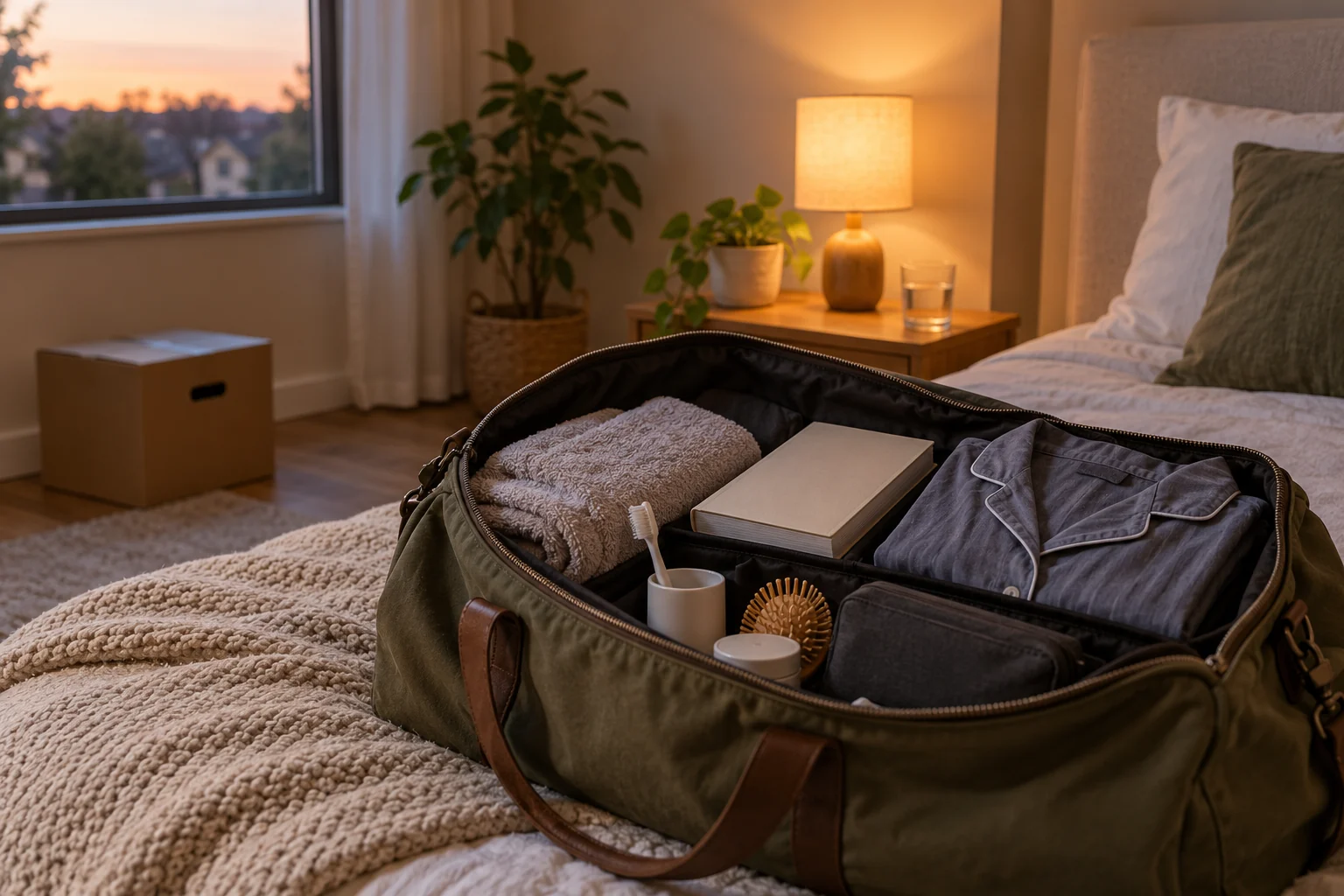
1. Create three groups and assign responsibility
Ask of each item: will I need it before the ordinary boxes are unpacked?
Divide essentials into a personal bag, a shared first-night box and a separate container for cleaning supplies and tools for opening boxes. This keeps keys easy to find and damp cleaning items away from bedding.
The day before, mark out an area to leave out of the general loading process. The person responsible checks later that everything travels with you. If several vehicles are involved, record who takes each bag or box and where it will go on arrival.
2. Keep this bag in your personal care
Carry identification, keys, payment methods, valuables and the documents needed for the handover yourself. Keep the destination, contact details and essential arrangements available offline. Put required originals in a closed folder; sensitive details do not need to appear on luggage labels.
Keep medicines in their original packaging with the leaflet where possible; follow storage instructions and avoid heat. Ask a pharmacist about transporting refrigerated medicines in advance. An ordinary moving box does not control temperature.
- Phone, compatible charging cable and a charged power bank if needed.
- Glasses, hearing aids and other personal aids used every day.
- A change of clothes, personal toiletries and things needed on the journey.
- A note on the bag listing items still in use until departure.
4. Run a separate check for each person
Think through a normal evening and morning. What does each person need, who packs it and who ensures it arrives? Involve older relatives and children in the decisions in ways that suit them.
Keep medicines locked away and out of children’s reach. Store cleaning products out of reach too, and never decant them into drinks containers. Check the storage spot in the new home before leaving boxes open.
| Who is it for? | Add individual essentials | Assign responsibility |
|---|---|---|
| Baby or toddler | Usual food and feeding equipment, nappies, spare clothes and an age-appropriate familiar bedtime item | A named adult remains available for care; carrying assistance does not include childcare. |
| School-age child | A favourite item, clothes and school things if needed the next day | Let the child help choose; an adult checks that nothing essential is missing. |
| Person who needs assistance | Personal aids and accessories for their usual evening routine | Agree together what support is needed and when. |
| Pet | Usual food, water, bowls and supplies appropriate to the species | One person arranges care and a suitable space on arrival. |
5. Close the remaining gaps on moving morning
An almost packed bag may still lack the toothbrush or charger used that morning. Finish the remaining-items list just before departure. Then check that the personal bag has not been placed with the general moving boxes.
Label the shared box on the lid and side, for example: “FIRST NIGHT · 1/2 · kitchen · needed early”. A bedding bag might be “2/2 · bedroom”. Agree the desired unloading order with the company doing the move; it must fit safe loading arrangements.
Secure luggage in your own car too. Do not leave bags and small items loose on seats or shelves. Easy access means being able to retrieve them at a safe stop, rather than searching while driving.
- Remaining-items list checked and boxes counted.
- Keys and access to the overnight accommodation confirmed.
- A person and vehicle assigned to each bag or box.
- A place agreed at the destination, clear of walking routes.
- Everyone knows which items are travelling in your personal care.
6. Make the first evening workable
Final practical check: can everyone eat, wash, sleep and get ready in the morning? If so, the remaining boxes can wait.
Take the personal bag and first-night box to the agreed place. Check with the person responsible that both have arrived. This sequence helps you settle in without opening every box at once:
- Check access, lighting and clear routes to the bathroom and sleeping area.
- Put out soap, toilet paper and a towel; store personal belongings safely.
- Prepare the sleeping space before opening other bedroom boxes.
- Set out food, drinks and anything needed for children or pets.
- Charge phones, set aside tomorrow’s clothes and choose a fixed place for keys.
7. Plan for furniture, kitchen equipment or keys arriving late
If furniture is due the next day, overnight essentials must travel independently with you. If access to the home is uncertain, arrange somewhere reachable to stay and confirm entry before departure. A packed box cannot provide a place to sleep.
If the fridge or kitchen is not ready, plan the first meal accordingly. Choose food whose packaging says it can be stored without refrigeration, or arrange a meal elsewhere. Remember drinks and any dishes you will need. Appliance preparation needs its own plan.
If the move is delayed, agree the revised arrangements directly with the named company carrying it out. Explain special requirements early; there is no need to photograph identity documents, medical records or valuables for the enquiry.
Questions about the first night
Will one first-night box be enough?
That depends on your household. Keep the personal bag separate; bedding or children’s essentials may need extra labelled bags. What matters is that each piece has someone responsible for it and a known place on arrival.
What should I pack on moving morning?
Anything still being used, such as a toothbrush, charger, glasses and day clothes. Put these on a remaining-items list beforehand and check them off before leaving.
Must the box go into the van last?
Agree that it should be accessible early at the destination. Its exact position depends on the vehicle and safe loading. Carry personal documents, keys and valuables yourself.
What changes if we stay somewhere overnight on the way?
Pack for the actual overnight destination and journey length. Essential luggage needs to arrive with you, even if the furniture transport follows a different schedule.
Sources and scope
Checked on 3 October 2026. These German-language sources support the advice on medicine storage, child safety and securing luggage. Packing lists, grouping and arrival order are our editorial planning aids, to be adapted to each household.