
Moving in poor weather
Moving in winter and rain: preparation and protection
In rain and winter weather, consider the whole route: from your old home to the vehicle and from the vehicle into your new home. Plan dry handover areas, suitable protection and named contacts at both addresses. This helps identify unresolved preparations before the first box is carried.
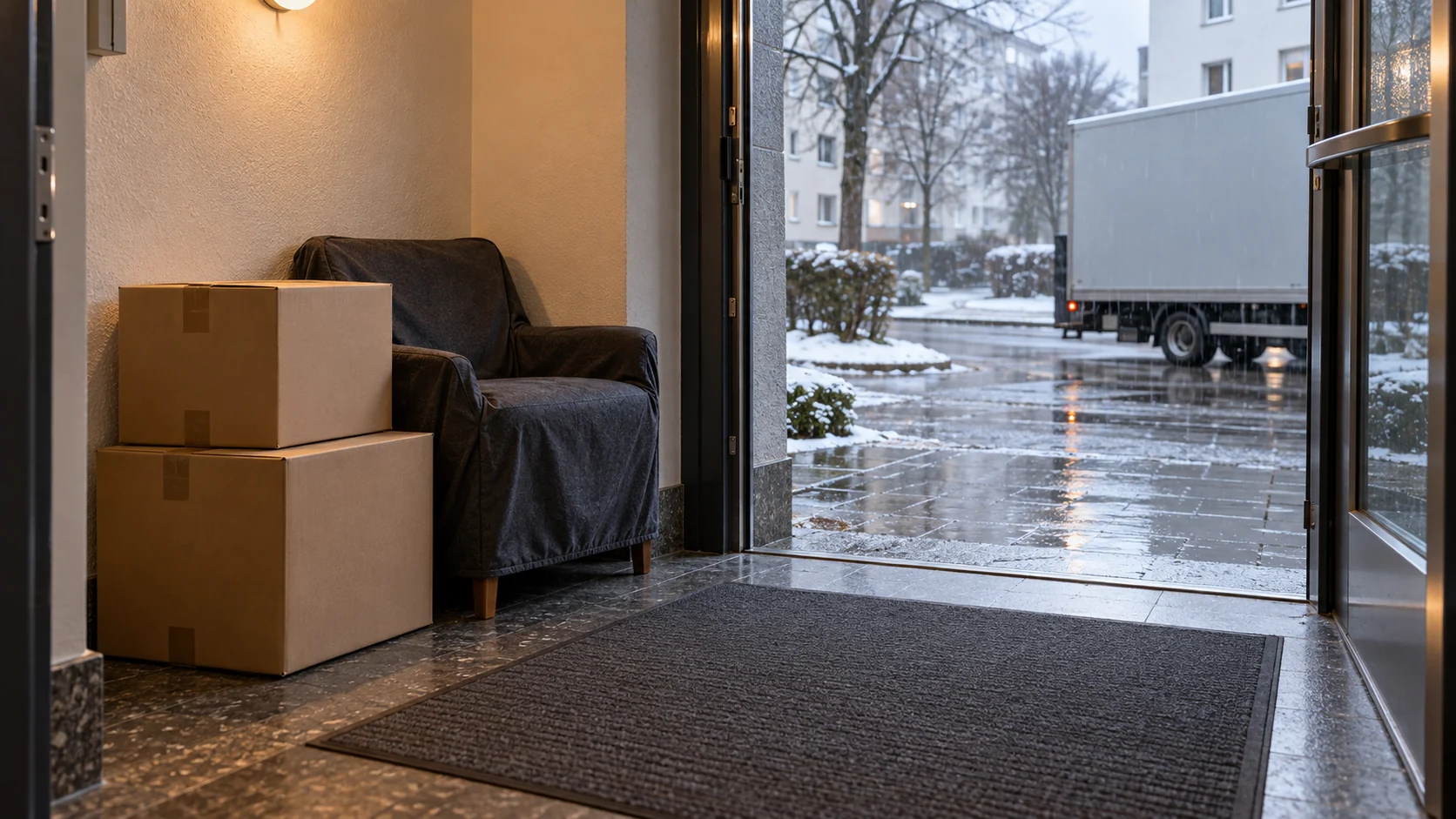
1. Check both addresses and the journey
Check official DWD warnings for departure, destination and the route. Read their time periods and recommended actions.
Agree who will discuss conditions with the moving company the evening before and on moving morning. Photographs of each entrance, the actual loading area and narrow sections help the discussion. A sheltered entrance at departure does not establish the conditions at the destination.
2. Add a weather plan to your moving schedule
Use this table as a planning aid rather than a universal timetable. Leave room before key handover, vehicle return and other fixed appointments. The amount of room needed depends on the journey, access and agreed work.
| When | Task | Record the outcome |
|---|---|---|
| When booking | Discuss loading routes, protection and contacts for both addresses. | Agreed work and unresolved questions. |
| Before moving day | Confirm building contacts, dry handover space and access to the new home. | Named people and reachable contacts. |
| The evening before | Review the weather and agreed plan together. | Confirmation or an adjusted sequence. |
| Before loading | Walk through actual access and available materials with the team. | Resolve outstanding points before carrying starts. |
| During an interruption | Agree the next sequence, contact and follow-up appointments. | A written update to the plan. |
3. Plan packaging and rain protection separately
A suitable moving box does not automatically keep rain out. Agree what protection is planned for cartons, upholstered furniture, mattresses and delicate items. It needs to suit the object and allow the team to handle it properly.
Prepare a dry collection area indoors. Ready items are handed over from there in the sequence agreed with the team. Do not simply wrap already damp belongings for longer storage. Have spare cartons and appropriate packing materials available if repacking is needed.
- Label destination room and unpacking priority; keep identification findable under protective packaging.
- Keep cartons indoors while preparing the load.
- Discuss materials, handling and exclusions separately for delicate belongings.
- Keep appliance instructions accessible: transport and initial use depend on the particular model.
4. Review the carrying route and floor protection together
A reserved loading space does not replace checking actual access. Resolve obstructions and the working sequence before anyone starts carrying belongings.
BAuA identifies secure footing and lighting as important features of walking areas. Moisture and unsuitable transitions can increase slip risk.
Walk the route with the team: apartment door, stairs, building entrance and loading area. Ask which floor protection suits the surface and use, and how it will be checked during the move. Do not leave loose plastic sheets or blankets along the carrying route; improvised protection must not introduce a trip hazard.
5. Assign clearing, gritting and ongoing checks
Idstein prioritises municipal winter-service routes. This does not promise a particular clearance time for your side street.
Ask the building manager or owner who is responsible for the actual entrance. Check local times, widths and permitted gritting materials; do not apply Idstein information automatically to Wiesbaden, Frankfurt or another town. The organisational table does not replace that check.
| Area | Clarify in advance | Contact in the plan |
|---|---|---|
| Public pavement | Local rule and responsible person for this section. | Building manager or relevant authority. |
| Private approach | Required preparation and who will arrange it. | Named person at each address. |
| Entrance and stairwell | Floor protection, ongoing checks and cleaning afterwards. | Building contact and team contact. |
6. Plan separately for people and personal bags
Name one person to manage keys, telephone and communication. Keep spare clothes, a towel, charger and first-evening essentials accessible in a personally supervised bag. Arrange it so that it does not have to be searched for in the furniture load.
Anyone accompanying children or responsible for a pet needs a separate plan and must remain available for that task. Discuss a later arrival too. Supervision, animal travel and furniture transport are separate responsibilities.
7. Discuss interruptions and possible extra charges
This guide makes no general claim about cancellation fees or liability arising from a weather warning. The specific agreement and circumstances need to be assessed.
BBK advises avoiding outdoor exposure during severe weather and following warnings. Dangerous outdoor work stops; a fixed appointment does not justify continuing to carry.
Agree with the named moving company how a pause, changed sequence or new date will be communicated. Do not invent a universal temperature or wind threshold. Actual conditions, official recommendations and the team's professional assessment determine the response.
| Quote item | Specific question | Record in writing |
|---|---|---|
| Protective materials | What is supplied and what must be prepared? | Materials, scope and price component. |
| Waiting or a new date | How are interruptions and changes handled? | Agreed conditions and contact person. |
| Changed loading route | What happens if confirmed access is unusable? | Alternative, revised work and price agreement. |
| Later appointments | Who informs the other address of changes? | Contact sequence and next discussion time. |
8. Record the condition and remaining work on arrival
Agree a dry receiving area and make personally needed items available first. Review visible changes to packaging and belongings with the team. Photograph anything unusual and record what was observed and whom it was reported to.
- Identify damp outer packaging and agree suitable next steps.
- Keep repacked cartons traceable by number and contents.
- Record actual arrival, remaining tasks and next actions.
- Complete cleaning and removal of floor protection as agreed.
Questions about moving in rain and winter
Does rain always mean cancelling a move?
There is no automatic decision based only on the word rain. Review warnings, actual access and protection options with the moving company. Dangerous conditions can require a pause or a revised plan.
How much extra time should I allow?
A universal number of minutes would not be useful. Discuss the journey, loading routes, protective materials and fixed later appointments with the company. Record how delays will be handled.
Is snow clearing and gritting included in the moving price?
Do not assume that it is. Clarify local responsibility with the building manager and explicitly agree any additional work with the company.
Can I keep using wet cartons as usual?
Have their condition and handling reviewed. Damaged or softened packaging should not be treated as unchanged; suitable replacement packaging may be needed, retaining the contents and identification.
Who agrees extra charges or a new date?
Discuss changes directly with the previously named contracting company. Confirm scope, price arrangements and the revised sequence in writing. This guide does not establish a general payment obligation for weather-related changes.
Sources and further reading
Official German-language sources checked on 13 October 2026. Workplace guidance provides orientation. Weather, local rules and specific responsibilities must be checked again before each move.