
Settling into a new home
Set up a child’s room after moving: what comes first
Start with what your child actually needs on the first evening: a usable sleeping place, accessible everyday belongings and a clear area to spend time. Complete the remaining furniture once its position and use are settled. Plan around age, needs and the apartment’s actual condition.
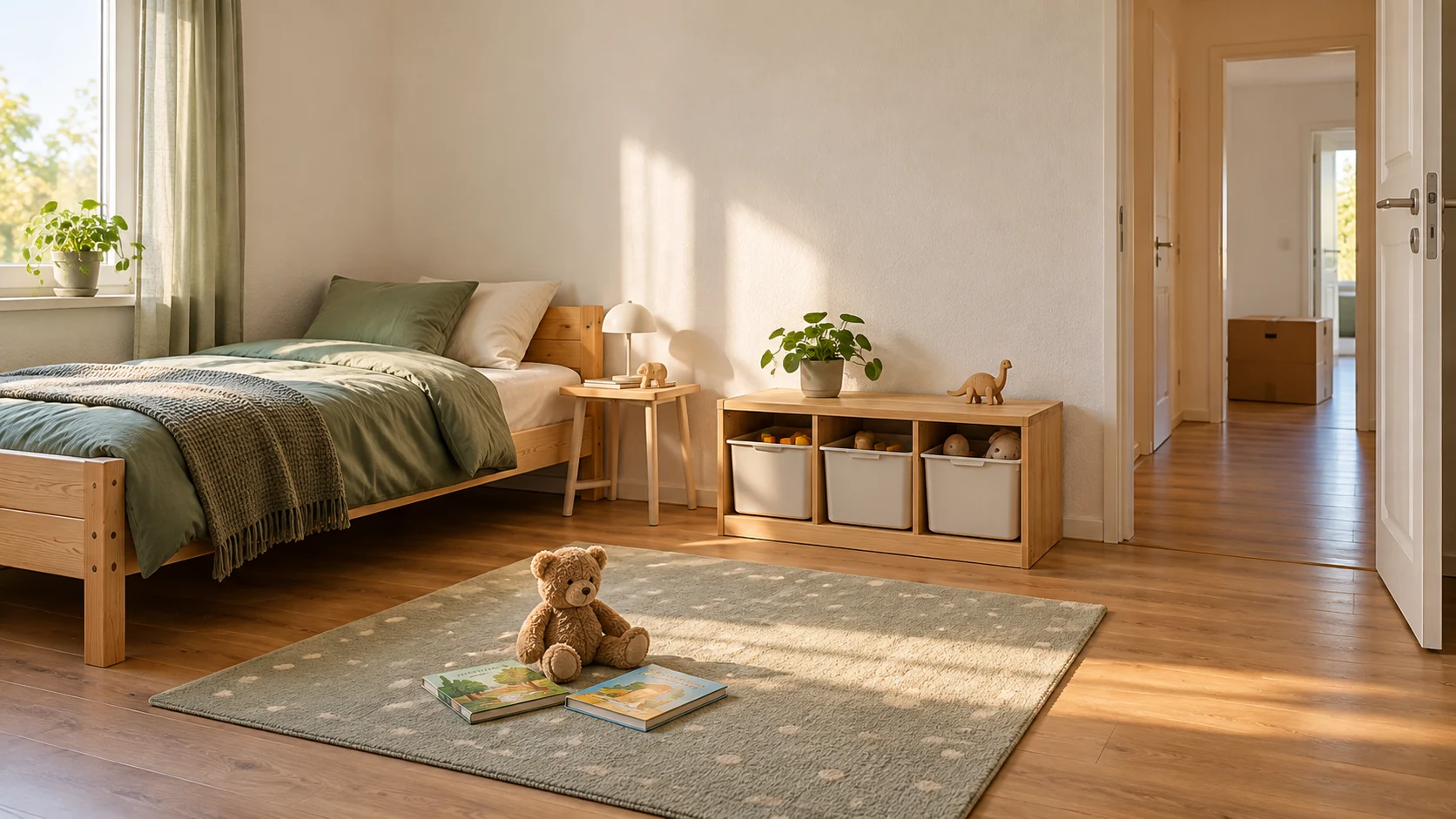
1. Check the area before it is used
Check the room and the route to it first. Remove moving materials and keep ongoing work outside the area in use. If important requirements are missing, agree another genuinely available place for the first evening, with the necessary adult support.
BAG Mehr Sicherheit für Kinder highlights furniture that cannot tip, managed cables and inaccessible blind cords. Seating and play furniture should not provide a climbing route to a window. Review these points in the new home.
2. Prepare the first evening separately
Pack the evening essentials where you can reach them before the other children’s-room boxes. Confirm where your child will sleep and wash, and show the routes. You can plan a familiar evening sequence with just a few unpacked belongings.
The sequence below is a family planning aid, not a fixed deadline for settling in. For babies and young children, sleeping equipment and products must suit their age; follow their specific use and safety instructions.
| Stage | Make available | Responsibility |
|---|---|---|
| Before unloading | Agreed place to spend time and an accessible evening bag. | Adult responsible for support and access. |
| Before the first evening | Usable sleeping place, nightwear, washing supplies and a familiar book. | Adult preparing the evening. |
| After assembly is complete | More clothing and selected toys. | Person completing assembly and confirming readiness for use. |
3. Give everyday belongings clear places
Begin with clothing needed now and a few familiar toys. Give them clear, accessible places. A picture on a box or a word chosen together can help your child find things.
Sort moving boxes by later tasks: clothing, books, play materials and things to put away after further assembly. Store boxes for unfinished areas in the agreed storage space. Check damaged furniture or toys before further use; assembly instructions and age guidance remain relevant.
- Discuss putting things away with your child if they want to take part.
- Keep school or nursery items separate for the next occasion they are needed.
- Settle everyday storage positions after the furniture is assembled.
4. Keep a clear area for play
BIÖG identifies usable play spaces and enough free playtime as important conditions. Leave space for what your child actually does instead of filling each available spot with furniture immediately.
Choose a few familiar things together to begin with. A book, a game and clear floor space can form a manageable first area. Add more materials once you see how the room is used. Adult support on moving day still needs an explicitly assigned person.
6. Choose decoration after the layout
Once furniture positions are settled, your child can help choose subjects and colours. Measure the usable wall and work with the finished picture’s outer dimensions. Check whether a frame is needed separately and how installation will be carried out.
Paper templates help compare sizes. Order after choosing the location, format and configuration. Wall decoration is an optional next step; choosing it does not complete an outstanding assembly task.
Advertisement for a related project: for an optional wall-decoration idea, you can view children’s-room posters at CetArt. The linked collection is in German. CetArt is a related shop; check the selected product variant, format, supplied components and delivery terms. This is not an independent child-safety recommendation.
7. Give unfinished tasks a person and a prerequisite
Agree who will take the next step and what must be finished first. One person can handle tasks consecutively; simultaneous child support and furniture assembly need people who are actually available.
Review the area in use after new deliveries or a change in furniture position. If a confirmed appointment moves, adjust the setup sequence before distributing more boxes around the room.
| Task | Needed first | Who confirms completion? |
|---|---|---|
| Assemble furniture | Complete parts, instructions and suitable working space. | Person doing the work or the appointed business. |
| Put away everyday belongings | Intended furniture usable and storage positions agreed. | Adult together with the child. |
| Install pictures | Format, wall details and fixings agreed. | Installer responsible for the agreed work. |
| Support children | Named person with time for the task. | Responsible adult at each handover. |
Questions about a child’s room after moving
Must the room be completely finished on day one?
Start with the usable areas actually needed for the evening. Additional furniture can follow once assembly is confirmed. If a necessary place is missing, agree an available alternative with adult support.
What should we unpack first?
Begin with things for sleeping, washing and the next day, plus a familiar book or game. Open the remaining boxes as the relevant furniture becomes ready.
Does every child immediately need a separate room?
Plan around the rooms genuinely available and the children’s needs. With shared use, agree sleeping places, personal everyday belongings and routines clearly.
When should we buy new furniture or posters?
Check existing furniture, its positions and usable dimensions first. Choose missing furniture against those requirements; decoration follows the everyday layout.
Does a moving enquiry include assembly and childcare?
The identified service partner must expressly confirm the requested assembly. Child support and care are organised separately and are not promised by an assembly enquiry.
Sources and context
Checked on 12 October 2026: BAG Mehr Sicherheit für Kinder on children’s rooms and product guidance; BIÖG on play spaces. The sequence, tables and task brief are editorial planning tools. CetArt is a labelled related product example.