
Moving planning
Flooring before moving in: sequence, readiness and handover
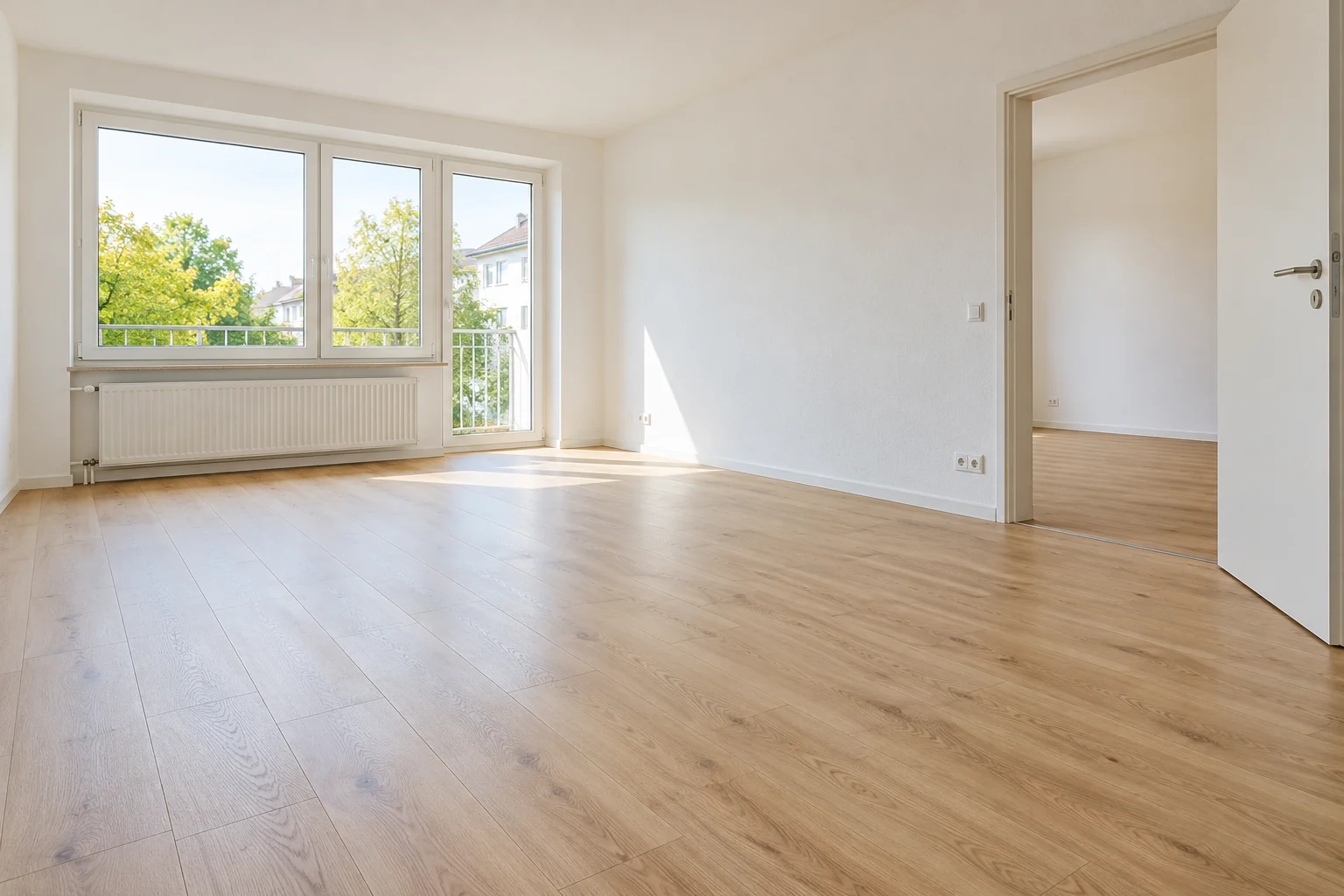
When the new home is empty and the schedule allows, flooring work is usually easier to organise before furniture arrives. The deciding point is when the finished floor can actually accommodate the intended use. Work backwards from furnishing the rooms and coordinate the flooring contractor, furniture delivery and move.
1. Decide by room: before the move, in stages or later
An empty floor avoids repeatedly shifting furniture. That favours completing flooring work before moving in, provided access, installation and subsequent use can be confirmed in time. If the intended move is too close to the possible completion date, plan a different sequence.
Check the hallway as well as the rooms. A finished bedroom is of little use if the only route to it remains closed. The following table is a planning aid, not a promise about how long the work will take.
| Situation | Practical approach | Confirm before committing |
|---|---|---|
| New home empty, access confirmed | Schedule flooring before furniture transport. | When can the affected rooms and their access routes be used for moving furniture in? |
| Home partly occupied | Agree stages only where an alternative room and separate routes are available. | Where will furniture go, and will the bathroom, sleeping area and exit remain accessible? |
| Only hallway affected, or dates overlap | Reschedule delivery or organise an agreed temporary solution. | Who confirms the revised date, storage space and possible extra costs? |
2. Clarify the work before fixing a date
Send the flooring contractor room measurements, your chosen finish and information about the existing floor construction. Agree which on-site checks are needed and who clears rooms, prepares doors or skirting and receives materials. For a rented home, discuss planned alterations with the relevant landlord or property manager before commissioning them.
Have unfamiliar older flooring or adhesives assessed for potential hazardous materials first. Some old flooring products contain asbestos, and disturbing them can release fibres. Do not sand, pull out or work on suspect material to take your own sample.
- Identify affected rooms and the carrying routes through them.
- Ask for the precise flooring, underlay, adhesive or surface-treatment system.
- Discuss subfloor assessment, necessary preparation and resulting schedule changes.
- Agree access, keys, power, indoor conditions and material storage with the contractor.
- Flag heavy fitted units, kitchen islands and planned door adjustments early.
3. Agree the sequence with everyone involved
Start with one shared schedule instead of three independently booked deliveries. One person keeps the current status and passes changes to the flooring contractor, furniture supplier and moving partner.
Heavy fitted items need specific coordination. For example, Quick-Step Alpha Vinyl Pad instructions keep kitchen islands off the floating flooring. The order of installing fitted units and laying the floor must suit the actual system.
- Complete the initial assessment and scope; record unresolved prerequisites.
- Clear rooms and material-storage areas, and coordinate necessary preparatory work.
- Schedule material delivery and any required acclimatisation.
- Have the appropriate contractor complete preparation, installation and any surface treatment.
- Obtain confirmation of permitted use for the finished rooms and carrying route.
- Then carry out furniture delivery and positioning under those confirmed conditions.
Advertisement · related project: For suitable flooring tasks in Wiesbaden and Rhein-Main, you can enquire about a partner through HandMen (German page). HandMen arranges the introduction; you commission the named contractor. Check service limits and availability beforehand.
4. Turn “finished” into specific questions about use
Do not reuse a number of hours or days from another project. The actual floor construction, on-site conditions and relevant manufacturer instructions determine the plan.
Describe the intended loads: people carrying boxes, a furniture trolley, a heavy wardrobe and a rug are different situations. A general “finished tomorrow” does not give enough information to organise moving in.
For KE 2000 S, UZIN separates readiness for loading from final strength and states climate conditions for its timings. This does not establish a universal wait for other adhesives or an unknown floor construction.
The Bona Craft Oil 2K sheet also distinguishes light use, furnishing, covering and cleaning. Obtain the appropriate dates for the treatment actually used. These examples are not product recommendations.
| What do you want to do? | Ask the flooring contractor | Record in the schedule |
|---|---|---|
| Walk on the floor | From when, and under which conditions, is this allowed? | Room, time and restrictions. |
| Carry in and position furniture | Have the intended furniture, wheels and concentrated loads been considered? | Permitted use and agreed protection measures. |
| Lay protection or rugs | Which material can remain in place, from when and for how long? | Suitable material, start time and removal. |
| Clean the floor | What initial cleaning is appropriate, and when? | Method and person responsible. |
| Use the rooms normally | Which indoor-climate and care instructions still apply? | Keep the instructions accessible to residents. |
5. Record readiness separately for each room
Walk through the affected rooms together before furniture delivery, as far as access is already permitted. Record visible condition with overview and detail photos, assigning each outstanding point to a specific room.
Use this short room record to coordinate the move. The flooring contractor supplies the technical conditions for use; the moving contact passes the relevant information to the delivery team.
- Room and system used: ____________________
- Last work stage and completion time: ____________________
- Walking, furniture and covering each allowed from / subject to: ____________________
- Permitted carrying route, protection and closed areas: ____________________
- Outstanding points, responsible person and next check: ____________________
6. Bring furniture in along the agreed route
Discuss the route from the vehicle to the final furniture position. Identify narrow points, thresholds and turns before the first large item is carried in. Any dismantling belongs in the preparations and agreed scope.
Decide who installs, checks and removes the approved floor protection. Use coverings and adhesive tape only after confirming their suitability for this floor. Protective material cannot make an unready floor suitable for a load.
Lift furniture instead of dragging it, and agree suitable protective pads with the flooring contractor. Place items directly in their destination room where possible to avoid moving them through unfinished areas again.
- Before unloading, confirm that rooms and the carrying route are usable as agreed.
- Do not put boxes in closed rooms “just for a moment”.
- Check damaged or dirty protection during the move and replace it as agreed.
- Record visible condition again after unloading and report concerns to the appropriate contact.
7. Agree a backup sequence before delivery starts
Set a deadline for the final update. Planning example: furniture is due on Friday, with the contractor confirming the particular use on Thursday. If confirmation is missing, activate the alternative arrangements with the companies involved. This illustrates communication, not a recommended drying period.
Alternatives may include a rescheduled delivery, expressly agreed temporary storage or a suitable room with independent access. Confirm access, extra trips, storage conditions and costs with each provider. The moving company and flooring contractor may be separate businesses.
For work in an occupied home, check whether the bathroom and sleeping area will actually remain accessible and usable. Arrange alternative accommodation if necessary. First-night essentials should stay with you independently of the furniture delivery.
Questions about flooring work and moving in
Should flooring always be done before moving in?
An empty home makes organisation easier when the work and subsequent use can be confirmed in time. If dates overlap, agreed stages or later furniture delivery may work better. Access routes also matter.
How many days should separate installation and furniture delivery?
There is no number that fits every floor construction. Ask the contractor about the actual system and intended load. Record the room, date and conditions.
Can I simply cover a floor that is not ready for furniture?
A covering does not make a floor ready for the load. Also confirm which protective material may be used and when. Furniture delivery must follow the confirmed conditions.
Can furniture stay in the home during the work?
Only where the contractor has agreed the sequence around it and suitable space and access routes exist. Explicitly account for moving furniture between rooms and any additional trips.
Sources and scope
Checked on 3 October 2026. German-language primary sources: Quick-Step Alpha Vinyl Pad instructions, November 2025; UZIN KE 2000 S; Bona Craft Oil 2K sheet, 30 April 2026; BAuA/BBSR/UBA guidance on investigating older building materials. Manufacturer examples apply to the named systems. The decision table, room record and scheduling example are editorial planning aids.