
Desk · Preparation
Moving a desk: plan parts, dimensions and reassembly
A desk is sufficiently described only when it is clear which parts will be carried and reassembled at the destination. Preparation therefore starts before the first fitting is loosened.
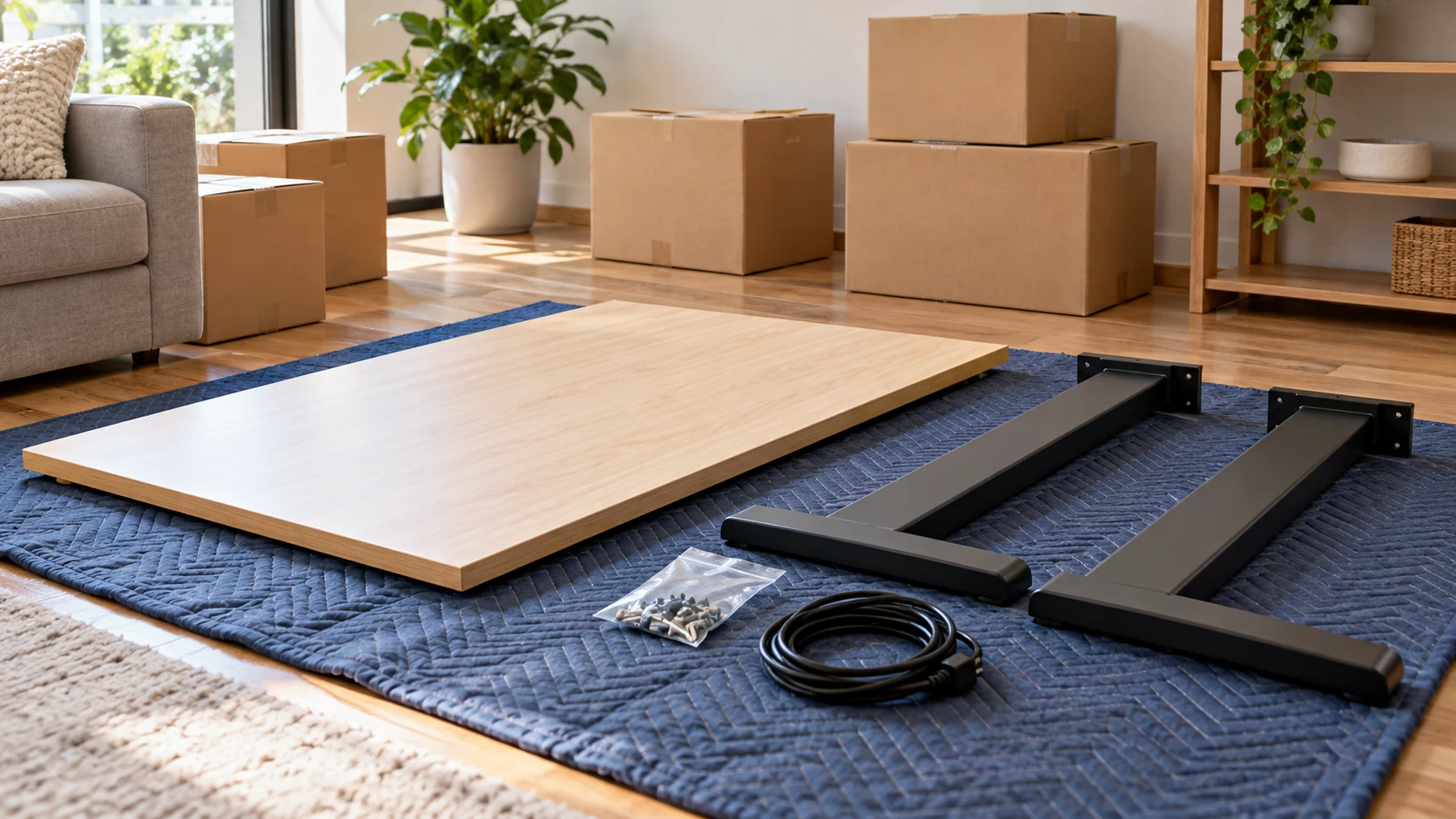
1. Record the desk model and workstation
For moving purposes a desk is more than its top. Record the frame, pedestal, extensions, cable tray and attached accessories. Photograph the assembled condition and existing damage. For a corner combination, show which side carries the return.
Record the manufacturer, model and article number where available. IKEA directs customers to the relevant product page for assembly instructions for current products. The correct instructions help identify components; they do not give blanket permission to dismantle every item repeatedly or in any order.
2. Decide what actually needs separating
Compare the assembled dimensions with doors, stairs, the lift and the route to the vehicle. Necessary dismantling depends on the particular model and transport route. Complete dismantling is not automatically the gentlest option, and carrying the desk assembled is not automatically possible.
Agree beforehand who dismantles and reassembles it. Include glued joints, damaged fittings, modified tops and unknown fixings in the enquiry. If something is uncertain, resolve it rather than trying to force screws loose. This guide does not provide dismantling instructions.
3. Prepare the workstation and electrical equipment
Remove loose objects, documents and personal data from drawers and shelves. Give the computer, monitor and accessories separate packages. Record which cables belong to which equipment without writing access credentials on boxes. Keep essential first-day work items separately accessible.
For electrically adjustable desks, follow the exact model instructions for preparation, disconnection and later commissioning. Do not improvise by opening or repairing motors, controllers or wiring for transport. Describe the equipment and agree what the provider will do; a transport order does not replace a repair order.
4. Identify parts and protect them separately
Assign a shared furniture ID, such as D-01, and an individual ID to each package actually separated. Keep screws and fittings associated with the furniture and preferably the relevant joint. Put the sealed labelled bag in an agreed safe place, not loose in an open drawer.
Protect edges, surfaces and protruding parts with suitable clean materials. Do not apply tape directly to delicate furniture surfaces. The top and frame must not knock against each other uncontrollably when moved. Protection and restraint must suit the weight, finish and handling planned by the carrier.
5. Describe packages rather than furniture names
Measure prepared packages including protection. “One desk” does not explain whether a long top, heavy frame and separate pedestal must be carried through a narrow stairway. Also identify components that the partner will pack on site.
A simple parts list links the ID, contents, dimensions, destination room and responsible person. The example below is an organisational template to fill in, not an instruction to dismantle your model this way. The package count follows from the agreed preparation.
| ID | Contents after preparation | Dimensions and destination |
|---|---|---|
| D-01-A | Top, if separated | Measure protected; study |
| D-01-B | Frame or permitted parts | Record actual packages |
| D-01-C | Fittings and accessories | Record associations and storage place |
6. Keep the assembly area clear at the destination
Mark the intended location and check that the finished combination, chair, doors and drawers fit the room. The carrying route and the eventual workstation are different areas. Do not put boxes where the frame needs to be assembled.
On arrival, reconcile the parts list and fittings. Before use, the furniture must be fully and safely assembled according to its instructions. A loose top, damaged joint or unresolved electrical function is not a matter to leave until later. Resolve defects and outstanding work with the responsible provider before loading the workstation.
7. Request the required services explicitly
Umzughilfen is a marketing and referral service based in Idstein for moving enquiries in the Rhine-Main region. State the model, prepared packages, access, special equipment and desired assembly status at the destination. Send photographs through the channel agreed with the named contact; the enquiry form has no file upload.
The independent partner is identified before commissioning. The quotation, contract, work, invoice and payment are directly with that company. Agree dismantling, protection, packing, transport and reassembly separately and clarify exclusions. Umzughilfen retains its own referral and privacy responsibilities. An enquiry is not a booking.
Questions about packing shoes
Does every desk need complete dismantling?
No. The model, condition and route determine what is needed. Agree only necessary and suitable dismantling.
Can I mix screws from several furniture items?
That makes identification harder. Keep fittings separated by furniture item and joint in labelled closed containers.
Is reassembly automatically included?
No. Have the offer explicitly confirm the scope, including accessories and possible exclusions.
Can an electric desk be used immediately?
Only after complete assembly and the checks or steps in its model instructions. Resolve unexplained faults first.
Sources and notes
IKEA instruction lookup checked on 31 October 2026. The source explains access to product documents, not a particular move. The parts list is an editorial planning aid. No manufacturer partnership or universal dismantling instructions are implied.