
Shop relocation · Customers and reopening
Moving a shop or studio: tell customers where and when to visit
“We are moving” does not tell a customer whether tomorrow’s appointment or collection can go ahead. Communicate the last visit at the old premises, the closure period and the first visit at the new premises separately. A short reliable notice and targeted messages help customers find their way.
1. Confirm visiting dates and operating arrangements first
Agree internally which details are confirmed: last customer visits at the old premises, the period without visits, first customer visits at the new premises and the correct entrance. Furniture transport or receiving the keys does not by itself confirm an opening.
Distinguish in-person sales, booked studio appointments, collections, online ordering and dispatch. These activities do not all have to stop or restart together. Communicate only the services actually approved and name a person responsible for changes.
| What is being planned? | What needs confirmation? | What the customer learns |
|---|---|---|
| Previous visiting location | Final day and time for customer visits | Until when the old entrance can be used. |
| Pause in customer visits | Start, end and monitored contact route | When visits are unavailable and how to ask questions. |
| New visiting location | Actual address, entrance and approved start | When and where customers can visit. |
| Appointments and collections | Location and time for each existing agreement | Which information applies to that particular visit or order. |
| Online shop and dispatch | Ordering, processing and dispatch checked separately | Whether and how those services work during the move. |
2. Choose the message route for each customer situation
Start with people whose particular visit is affected. A public announcement will not reliably reach everyone who has already booked, ordered or arranged a collection. Record who receives which information, through which established contact route, and who answers questions.
Check advertising mailing lists against section 7 UWG, including applicable exceptions. Stored contacts alone do not authorise blanket advertising.
| Customer situation | Suitable route after checking | Essential information |
|---|---|---|
| Existing studio appointment | Established direct contact route | Date, time, actual location and how to raise questions. |
| Collection or ongoing order | Order-related message | Specific collection point or separately confirmed arrangements. |
| Regular visitor without a booking | Notice at the premises and current contact page | Last visiting day, closure period, new entrance and start date. |
| New visitor using search or maps | Public location and contact information | Current address, opening hours and directions. |
| Recipient of opening advertising | Lawful advertising list or approved channel | Confirmed opening and relevant destination page; clearly identifiable advertising. |
3. Write a short notice with a concrete sequence
A useful notice identifies the dates, new address, first visiting opportunity and a working contact. Printed notices should make the address and contact readable without a smartphone; a QR code can add directions. Agree the position of notices at either premises with the responsible party.
The following invented example concerns a small shop, not an actual customer. Assumptions: final sales at the old premises on Friday at 17:00, no customer visits after that until Tuesday at 10:00, then opening at the new premises. The linked contact page already contains the confirmed address and directions.
Example wording: “We are moving. You can visit our current premises until Friday at 17:00. In-person sales will then be closed until Tuesday at 10:00. From Tuesday at 10:00, we welcome you at our new premises. Find the new address and directions on our contact page. We will contact you directly about collections already arranged.”
Do not copy invented times into your announcement. Use calendar dates in the real notice so “Friday” stays unambiguous when read later. For a studio, add the confirmed location for each booked appointment.
4. Align the contact page, maps and visible notices
Use your own contact page as the current reference and check every language you offer. Use the same approved details in booking confirmations, public profiles, email signatures and premises notices. Older posts still visible may need a clear reference to the latest information.
Edit the actual opening-hours fields in your Google Business Profile and check which setting suits temporary changes. Adding relocation text does not replace checking the hours people see. Separately check the location change and its public presentation afterwards.
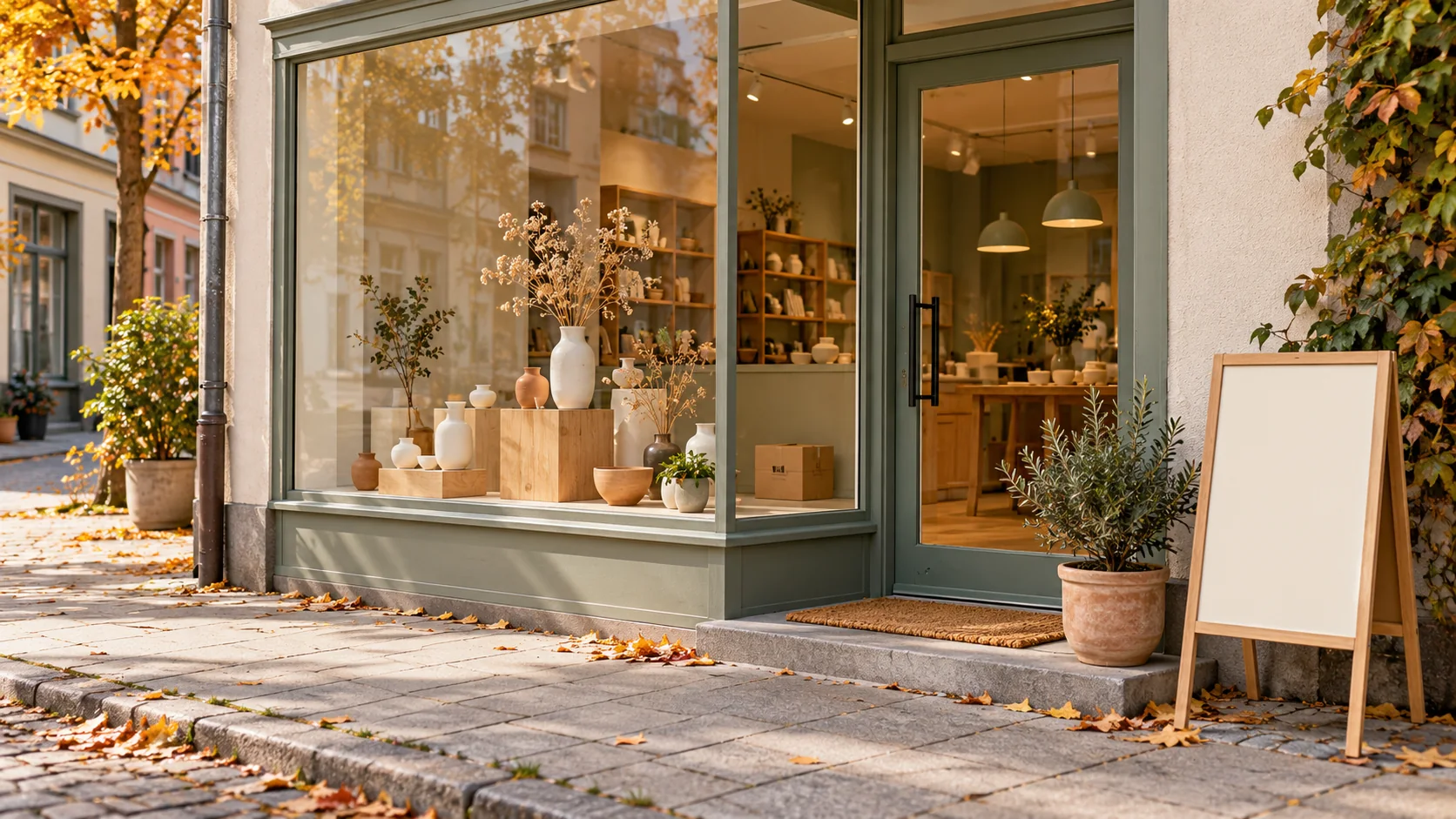
- Use new exterior and entrance photographs only when they show the actual premises customers can visit. The picture on this page is expressly an AI illustration.
- Open the map marker, directions button and written entrance instructions individually. Distinguish the customer entrance from delivery access.
- Make signage and directions agree. Describe features such as step-free access only after they have actually been checked.
5. Handle appointments, collections and live orders separately
Review every agreement due to be fulfilled during the move. Assign each affected appointment or order an owner and a next update. A general opening announcement does not automatically change existing agreements.
For collections, staff need to know where the relevant goods actually are and who can release them. Publishing a new address does not mean every order is ready there. For studio appointments, the calendar, reminder and personal message should identify the same confirmed location.
- Receive questions through a monitored contact route and pass them to the responsible person.
- Agree changes specifically with those affected and retain any confirmations required.
- Release dispatch and order processing through the stock and order plan, rather than solely because an opening post is published.
6. Test the announced journey and visiting arrangements
Ask a second person to follow the published information. Start with an existing search result, booking message or printed QR code. Check on a phone too. The test journey should finish at the entrance where customers will actually be received at the advertised time.
For each mismatch, record the source, observation, owner and next check time. Check the current situation again on the first visiting day. An old notice or earlier message can circulate longer than the current website version.
| Test | Expected result | If it differs |
|---|---|---|
| Contact page and language versions | Confirmed address, first visiting date and contact agree | Correct the affected version. |
| Map and directions | Correct location and understandable customer entrance | Correct the destination or written directions. |
| Public opening hours | Closure period and current operation are represented accurately | Edit the appropriate profile field and check again. |
| Existing appointment or collection | The person knows the specifically confirmed location | Clarify the affected agreement directly. |
| Printed notice and QR code | Usable information without a phone; current link | Update the notice or destination page. |
| Question about the new location | Responsible person is reachable and informed | Correct the contact route and handover. |
7. Plan paid opening advertising separately if needed
If using Google Ads for the new premises, check the advert and destination page together: opening date, address, directions, contact and the actual offer should agree. Explicitly agree budget, duration and approval. An opening announcement does not automatically need a paid campaign.
Check the target area and advanced location options separately. “Presence or interest” can include people interested in the target region; the appropriate choice depends on the campaign. A new postal address does not automatically change that setting.
Location assets use a location source. Check the linked source, selected locations and the details actually displayed. Do not assume changes synchronise everywhere immediately. Before approval, follow the journey after the click on a phone too.
Advertisement for a related project: Salestudia, based in Idstein, offers Google Ads services to businesses in Germany. You can discuss campaigns for the new location with Salestudia — German-language service page. Salestudia is independent of Google. This optional service is separate from transport; agree scope, budget and approval directly. No particular visitor numbers or sales are promised.
8. Define a separate scope for the physical shop move
Umzughilfen handles relocation referrals in the Rhine-Main area and is based in Idstein. You can request the selection of an independent partner to transport shop or studio contents. The quotation, contract, work, invoice and payment are directly with the partner named in advance; Umzughilfen retains its own referral and data-processing obligations.
Describe the inventory, fragile items, access at both premises and preferred time windows. Technical installations or specialist assembly work need express agreement with a suitable provider. Signage, website updates, advertising and customer notifications are separate tasks; a transport booking alone does not confirm an opening date.
Questions about announcing a location change
When should I announce the new shop?
Once the visiting dates, address and contact routes being communicated are internally confirmed. Do not present an opening awaiting approval as fixed. Existing affected appointments need their own arrangements.
Is a social media post enough?
It adds information but does not reliably reach every existing customer. Update the contact page and public location details; contact affected people with appointments or collections directly.
Can online orders continue while the shop is closed?
That depends on working order acceptance, stock, processing and dispatch. Check these separately and communicate only what is confirmed. An open online shop and an open physical shop are different operating states.
What if reopening is delayed?
Publish the confirmed update at the contact points you manage and clarify affected appointments or collections directly. Until the new start is confirmed, provide a working contact and say when the next update will be given.
Do I have to launch Google Ads for the move?
No. Reliable visiting information and care for existing customers come first. If paid advertising is useful, plan the destination page, location details, geographic options, budget and approval as a separate job.
Sources and scope
Checked on 20 October 2026: Google Business Profile guidance on opening hours, Google Ads location options and assets, and section 7 UWG for the limited topic of electronic advertising. Tables, tests and example shop hours are editorial planning aids, not a real customer case. Individual permission to send and legal questions require separate assessment. The Salestudia offer is labelled as advertising for a related project. Sources are in German.