
Packing · Dishes and glassware
Moving dishes: prepare plates, cups and glasses
Packing tableware involves two checks: whether the set is complete and whether each piece has suitable protection. Six plates describe the contents, not the number of boxes you need. Start by sorting the kitchen cupboards, prepare a working area and agree the packing arrangement before recording the finished packages.
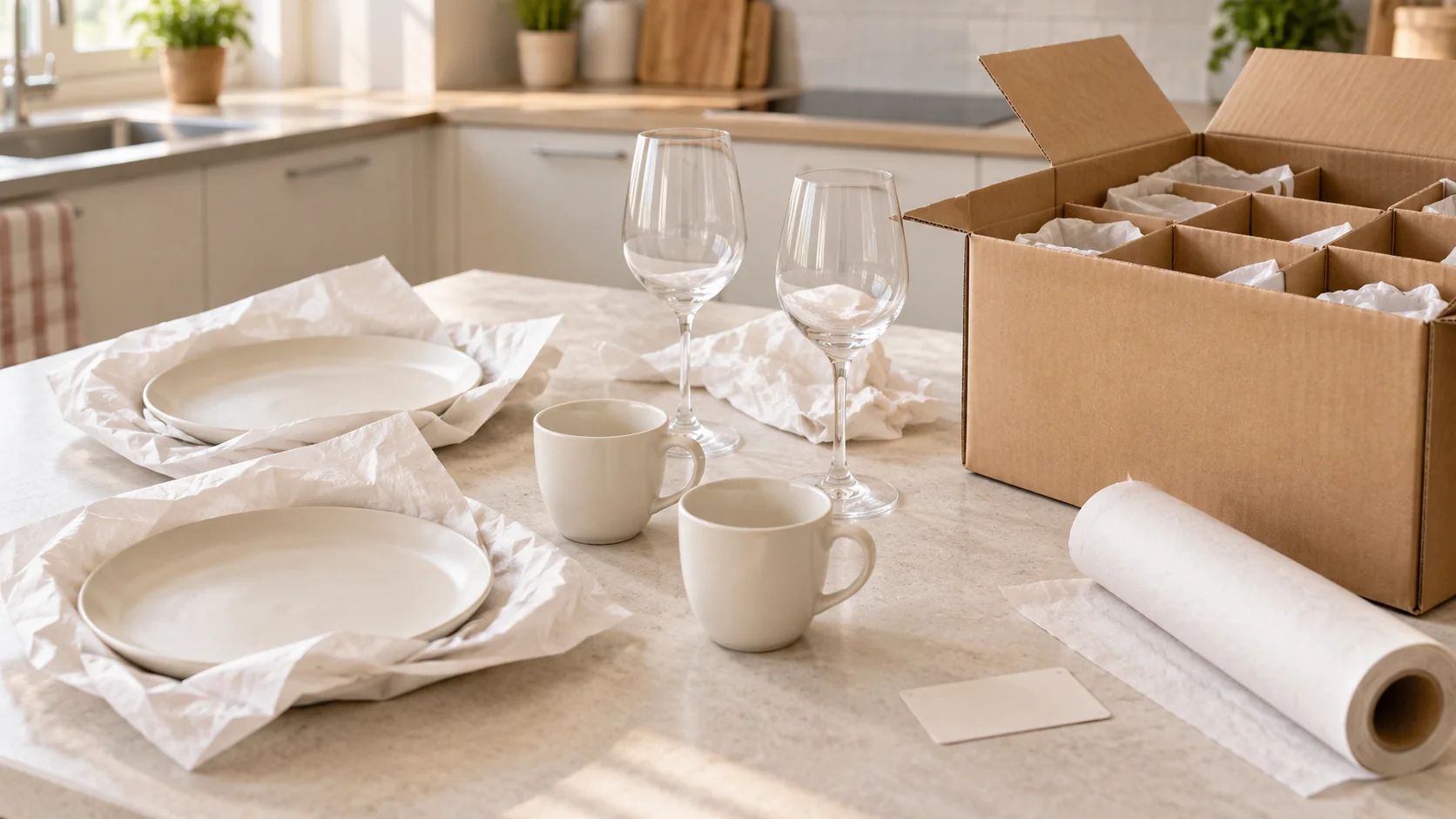
1. List complete sets before packing
Separate plates, cups, stemware and unusually shaped pieces. Count the items in each set and note visible chips or cracks before handover. For a dinner service or family collection, take an overall photograph and a few detailed views. Identify large serving dishes, teapots with separate lids and delicate glasses individually in the list.
The fictional example contains six plates, four cups and four glasses: fourteen items altogether. These are contents, not box capacities. The number of packages depends on the selected protection and a packing trial. Keep the item count distinct from the package count you give the transporting provider.
| Group | Example contents | Item count |
|---|---|---|
| P01 | Plates | 6 |
| P02 | Cups | 4 |
| P03 | Glasses | 4 |
| Total | Box count not yet determined | 14 |
2. Choose packaging around the protected item
DPD recommends keeping glass and porcelain away from direct contact with the outer carton and cushioning empty space with suitable material.
Check the box’s condition and dimensions, allowing for the chosen protection. Follow the manufacturer’s instructions for specialised boxes and inserts; a cell must accommodate the actual item with its packing. Prepare one sample and agree it with whoever is responsible for packing or accepts the packages for transport.
Weigh the completed box and record the result for the handling discussion. Do not fill remaining space with heavy dishes simply to use the whole carton. If contents or packaging sizes change, update the final package count. Estimate the materials needed from a trial rather than kitchen floor area alone.
3. Separate plates and cups within the package
DHL advises cushioning contents on every side and avoiding direct contact between items. Provide individual protection for each plate and cup.
Do not transfer an ordinary cupboard stack into a box unchanged. With a dedicated plate-packing system, follow its intended arrangement and filling sequence. Check room for cup handles: the diameter of the cup body does not describe the whole piece. Confirm the fit before preparing the rest of the set.
Check the group before closing the package. Record a separate lid alongside its teapot or matching item, but do not treat it as protected merely because the pieces are together. Keep any item without a suitable solution on the open-questions list and show it to the provider before handover.
4. Check glasses and unusual shapes separately
For a stemmed glass, height, bowl width and the base all matter when choosing an insert. Measure the piece and show its shape in a photograph. Do not force it into a tight cell. If the cell fits only the bare item, reconsider the packaging arrangement rather than removing the intended protection.
Group glasses by type and keep the count of each group in the inventory. Long stems, thin rims, projecting handles and separate lids deserve attention when selecting a solution. Agree individual packing and handover for especially valuable or unusual pieces in advance, instead of adding them to a box already accepted by the provider.
5. Label the box and retain a contents list
Give each finished package a unique ID, such as G01. On the outside, identify the new room, general contents and fragility. Keep the detailed inventory under the same number in your list. This supports a completeness check without a lengthy item-by-item description on every side of the carton.
A fragile label communicates what is inside; it does not replace the agreed protection. Update both entries if you transfer cups between boxes. The transporting provider decides vehicle placement and loading order. Give it the final inventory and details of any separately handled packages before collection.
| Location | Example entry |
|---|---|
| Outside | G01 · kitchen · tableware · fragile |
| Inventory | List and count of the pieces actually packed |
| Separate priority | Open first — only for the selected kit |
6. Keep a separate first-day kitchen kit
Decide how many people will use the kitchen immediately after arrival and what they will need. Select a small set of plates, cups and cutlery that can be found without unpacking all the tableware. Pack it with the same care and give it an opening priority, rather than leaving items unprotected for convenience.
Record who carries this kit and who receives it at the new address. If the kitchen is not yet ready, arrange an accessible place for the essentials and a practical plan for the evening. Full unpacking may need to wait for cupboard assembly or other work, so distinguish what must be available from what can remain packed.
7. Check sets as you unpack them
Prepare a clear, stable surface and open one box at a time. Compare the contents with the list, including lids and separate parts. Before clearing the packing material, check that no small item remains inside it. Keep empty cartons away from the passage while the rest of the delivery continues.
If you notice damage, record the box, its ID, the internal packing and the item, then contact your contractual partner. Do not handle broken glass with bare hands. Distinguish visible observations from guesses about their cause. The inspection identifies open issues; it does not replace the agreed process for reporting damage.
| Status | What to record |
|---|---|
| Received | Box ID |
| Unpacked | Contents checked and separate parts located |
| Issue found | Missing or damaged item, photographs, provider contacted |
8. Agree packing work through the enquiry
Umzughilfen is a marketing and referral service based in Idstein for moving enquiries in the Rhine-Main region. Explain how many boxes are ready, which tableware still needs packing and whether there are valuable or oversized pieces. If photographs are needed, arrange delivery with your named contact; the enquiry form does not support file uploads.
The independent partner named in advance confirms feasibility, materials and the scope of work. It provides the quote, enters into the execution contract with you, performs the work, issues the invoice and receives payment. Umzughilfen retains its own referral and data-protection obligations. An enquiry is not a booking.
Questions about packing tableware
Does the number of plates tell me how many boxes I need?
No. Item dimensions, the chosen protection, packaging and packed weight also matter. Begin with a packing trial.
Should I list the service or the individual pieces?
For a completeness check, record the types and number of pieces. Once packed, connect them to the relevant box IDs.
Should I flag cups with large handles?
Yes. A photograph and overall dimensions help select packaging with enough room for the handle.
Who buys the packing materials?
Agree whether you provide them, the executing company does, or each party supplies materials for its own part of the work. Clarify this before packing starts.
When should I give the final box count?
After packing and before loading. If quantities or contents change later, inform the selected provider and confirm the revised arrangement.
Sources and planning notes
Editorial guide dated 26 October 2026. The DHL and DPD sources concern parcel packing and support general principles of protecting contents. Agree the conditions of your actual move with the provider. P01–P03 and G01 are fictional examples.