
From the first box to unpacking
How to pack and label moving boxes
A well-packed box closes properly, protects its contents and makes its destination clear. A simple packing order, unique box numbers and a separate first-day kit can save you a lot of searching after the move.
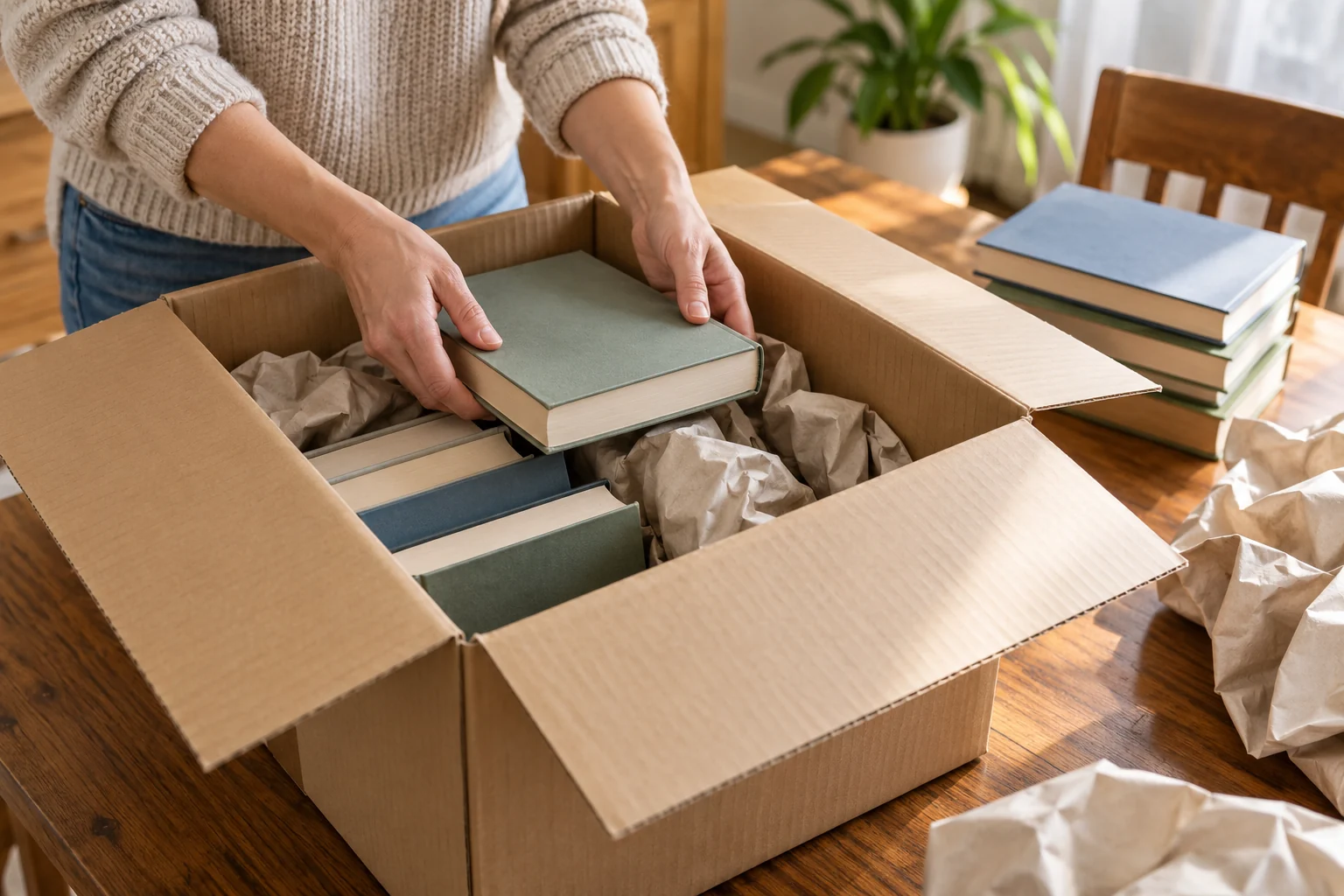
1. Set up your materials and packing space
First decide what is actually coming with you. Then set up a small packing station with suitable boxes, protective materials, packing tape, a thick marker and your list. Finish one cupboard area at a time where possible: several open boxes from different rooms make it harder to keep track.
Check used boxes for dry, firm bases, sound handles and intact edges. Remove or cover old destination labels. Assemble and close each box according to its manufacturer’s instructions; folding bases and taped closures may need different steps.
| Material | Purpose | What to check |
|---|---|---|
| Boxes in suitable sizes | Keep related items together | Condition, assembly and the manufacturer’s load rating |
| Clean packing paper and suitable padding | Protect surfaces and fill gaps | Material compatibility; printed ink can transfer |
| Packing tape and readable labels | Close and identify boxes | Dry surfaces; labelling rules for rented boxes |
| A list on paper or your phone | Find and count boxes | Easy access on moving day |
2. Check the weight as you pack
The strength of the box and the strain on the person carrying it are different limits. Both need to be considered.
A box’s printed load rating describes the packaging. It is not a personal carrying target. Agree with your helpers or moving provider which boxes and weights suit the actual route. A scale is particularly useful for books and files, where weight can build up surprisingly quickly.
VBG identifies carrying distance, frequency, posture and individual factors alongside weight when assessing physical strain. A single number in kilograms therefore cannot describe the particular carrying conditions.
Unfallkasse Hessen recommends splitting heavy loads where possible and planning suitable handling equipment. Discuss this with the team, especially for long access routes or stairs.
- Weigh heavy contents early and distribute them across suitable boxes.
- Do not keep adding items simply because there is space left.
- Repack an overly heavy box before moving day; writing “heavy” on it does not solve the problem.
3. Choose contents that work together
Use small boxes for heavy, compact items and larger boxes for light, bulky contents. Put heavier items at the bottom and fill remaining gaps with suitable lightweight material. OBI also recommends this approach.
Keep one destination room per box where possible. If you top up books with a light textile, record both in your list. Do not put fragile objects underneath heavy items just to fill the box.
The flaps should close flat without pressure. A bulging lid makes stacking difficult; large unsupported gaps call for a different arrangement or suitable filler. Keep hand holes usable and protect delicate contents from contact through the openings.
4. Give fragile items their own packing routine
Set aside a clear space for crockery, glassware and delicate decorations. Wrap each item in protection suited to its surface and separate the pieces. Before closing the box, check whether anything can move freely or knock against another item.
A “fragile” label does not replace suitable protection inside the box. Discuss unusual shapes, valuable pieces and delicate equipment with the moving provider in advance. An original box is useful only if its matching inserts are also present and in good condition.
- Pack dry textiles and papers separately from liquids.
- Keep tightly closed everyday liquids upright in additional leakproof containment, subject to the provider’s acceptance rules.
- Put screws and accessories in labelled bags that clearly identify the relevant furniture or device.
- Keep private reference photos of connections or complicated packing arrangements to help with reassembly.
5. Label the room, box number and unpacking priority
Use the destination in the new home. “Old living room” is not much help if the books now belong in the study. Assign room codes before packing, then repeat those codes in your list and on the doors at the new address.
Our suggested format is a room code plus a sequential box number, followed by brief contents and an unpacking priority. For example, R01-03 is the third box for room R01. Colour can provide an extra cue, but readable text is still needed. Repeat the label on the lid and two visible sides.
The table shows an example system, not a required standard. Use each box number once. If you change the destination, update both the label and your list.
- Put only useful destination and handling information on the outside.
- Keep detailed inventory entries in your own list; do not advertise valuables on the label.
- Write a weight in kilograms only after weighing the box.
- Add a clear orientation mark if the contents need to remain a particular way up.
| Number and room | Brief contents / handling note | When to open |
|---|---|---|
| R01-03 · Kitchen | Plates · fragile | First day |
| R02-01 · Bedroom | Bed linen | First, for the first night |
| R03-04 · Living room | Books | Later |
6. Start with the things you use least
Begin with items you will not need before the move: seasonal clothing, decorations or rarely used files. Next tackle areas where a small remaining set will cover daily needs. Leave a manageable minimum in the kitchen and bathroom until the final day.
Close, label and record each finished box straight away. A status column with “packed”, “arrived” and “unpacked” is enough. Mark cupboards that are still untouched separately, so a stack of finished boxes does not create a false impression that everything is accounted for.
Keep packed boxes dry and access routes clear. Tell the moving provider if the final box count is significantly above the estimate; this may affect vehicle and time planning.
7. Keep a first-day box accessible
This box needs to be within reach when you arrive. Agree where it will travel and how it will be unloaded so it does not disappear behind the rest of your belongings. Label it clearly “FIRST DAY” and add its destination room or agreed drop-off point.
Adapt the contents to your household. Keep keys, identity documents, important papers, necessary medication and valuables separately in a bag that stays under your personal supervision.
- Toilet paper, hand soap, a towel and personal toiletries.
- Cups, a little crockery, cutlery, drinking water and a simple snack.
- Chargers and cables needed that evening.
- Bed linen and a change of clothes, in a separate accessible bag if useful.
- Bin bags, a cleaning cloth, a marker and a safely stowed tool for opening boxes.
- Immediate essentials for children or pets, where relevant.
8. Check the boxes before collection
Compare the finished boxes with your list. Are lids closed, destination rooms readable and unfinished tasks clear? Point out items needing special handling, the first-day box and access to the rooms. On arrival, check numbers and visible discrepancies while you can discuss them together.
If you want a packing service, clarify in the quote who packs which items, which materials are included and who will unpack or remove the packaging. Explain particular requirements before booking.
umzughilfen.de refers enquiries to independent partners. The specifically named partner provides the quote, enters into the contract and performs the agreed services; invoicing and payment are directly between you and that provider. umzughilfen.de remains responsible for its own referral activity and data processing.
Questions about packing and labelling
Does every box need to be filled to the top?
The contents need support and the lid should close flat. If the box is already heavy enough, do not add more heavy items. Use suitable lightweight filler or a smaller box.
Can I put books in a large box?
A large box of books can quickly become difficult to handle. Divide them between smaller suitable boxes and check the weight while packing. Agree the handling arrangements with the people doing the carrying.
Is a different colour for each room enough?
Add the written destination room and a unique box number to each colour. That makes the destination clear without a colour key and lets you find an individual box in the list.
What should stay out of the first-day box?
Keys, identity documents, important papers, necessary medication and valuables should not get lost among the moving boxes. Keep them in a separate bag under your supervision; use the first-day box for everyday items needed on arrival.
Sources and editorial method
Sources checked on 22 September 2026; linked material is in German. The occupational safety sources explain strain factors and ways to reduce loads, rather than setting a personal packing weight for this guide. Room codes, the list and packing order are editorial organisation suggestions.