
Packing · Shoes
Packing shoes for a move: protect pairs and find them again
Twelve pairs of shoes do not automatically mean twelve moving boxes. What matters is the protected package count, outside dimensions and footwear you need to reach on moving day. Sort by person, material and use before emptying the entire shoe cupboard into one large box.
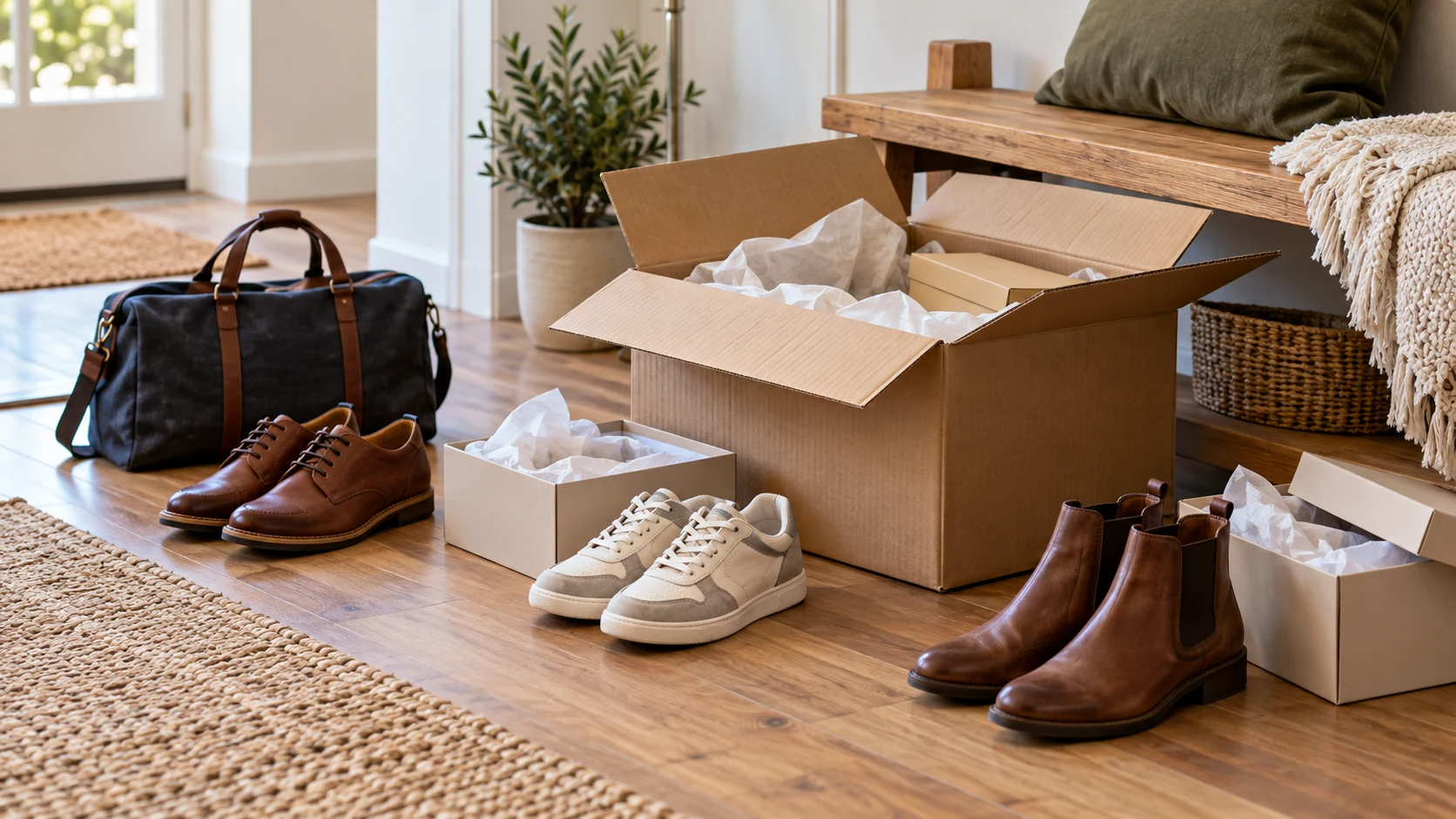
1. Count pairs and set everyday shoes aside
Work through one person’s footwear at a time. Match shoes, loose insoles and accessories. Separate pairs that are moving from those you no longer want; donation or disposal is not silently included in a transport order. Photograph delicate models and existing damage.
Set aside shoes for moving day, the next work or school day and wet weather if relevant. Keep them in accessible personal luggage, not at the bottom of a seasonal-clothing box. Record the pairs you will carry yourself so they are not counted twice in the transport inventory.
2. Pack only after cleaning and drying
Start preparation several days before packing. Remove dirt only according to the particular model’s care instructions; leather, suede, textile uppers and coated surfaces do not all tolerate the same treatment. Do not try a new cleaner or waterproofing product on every pair just because time is short.
Salomon recommends drying its running shoes in a ventilated room at room temperature. This does not establish a washing method for other materials. Your own manufacturer’s instructions remain decisive. Damp shoes should not go into a closed moving box; arrange a separate suitable solution for wet pairs and agree their transport in advance.
3. Protect shape and surface separately
Choose clean, non-colour-transferring separation between soles and uppers. Give each shoe a position where a heel, buckle or hard sole does not press on the other shoe. Delicate pairs may need individual covers within the same package. Apply adhesive tape to the outer packaging, not directly to leather or fabric.
Clarks recommends correctly fitting supports and acid-free paper for storage. A support should preserve the existing shape, not stretch the shoe. Do not fold tall boot shafts simply to fit a smaller box; choose suitable packaging and consider the model instructions.
Check existing shoe boxes for strength, cleanliness and space. A thin retail box is not automatically sturdy transport packaging. It can keep a pair together inside an appropriate outer package. Do not place heavy objects on delicate shoe uppers.
4. Trial-pack before counting boxes
Start with a representative selection. Check that shoes sit without pressure, do not move loosely inside and allow the lid to close without compression. Then measure the closed package and weigh it if a scale is available. There is no fixed number of pairs that fits every box.
Label boxes with a serial number, person and destination room. Keep the pair-to-box mapping on your private packing list. Transport planning uses the packages actually handed over: several small shoe boxes inside one moving carton are not automatically separate load items.
An example for your own list: S-01 holds one person’s seasonal pairs, S-02 holds separately protected boots; the next morning’s pair stays in personal luggage. This is an organisational example, not a quantity or weight limit.
5. Agree preparation, packing and carrying
State whether shoes will already be prepared and packed or whether a partner should provide materials and packing work. Cleaning, drying, selecting suitable shape supports, wrapping and carrying are different tasks. An agreed transport service does not automatically include this preparation.
Provide finished box counts and dimensions, unusual models, access at both addresses and the intended drop-off position. Agree individual handling for valuable or damaged footwear with the named company. Have uncertain packaging checked before collection rather than deciding while loading.
Umzughilfen is a marketing and referral service based in Idstein for moving enquiries in the Rhine-Main region, connecting customers with independent partners. The quotation, contract, invoice and payment are directly with the specifically named company performing the work. An enquiry confirms neither availability nor a particular packing service.
6. Unpack at the destination rather than storing indefinitely
Put boxes in a dry place outside the carrying route. Open the pairs you need first, then reconcile box numbers and the packing list. Check surfaces, shapes and accessories and document noticeable changes for discussion with your contractual partner.
Do not leave shoes unchecked in a basement or garage for months. Packaging for a short journey is not automatically suitable for long-term storage. Check room conditions, material instructions and the final storage position. If moisture entered during transport, follow the manufacturer’s guidance rather than sealing a damp pair again.
Questions about packing shoes
Can shoes share a box with clothing?
Keep soles reliably separated from delicate textiles. A dedicated, labelled package makes inspection and retrieval easier. Do not use loose shoes as filler between garments.
Should every shoe go into a plastic bag?
No single cover suits every situation. Material, condition and duration matter. Do not seal damp shoes inside, and follow the manufacturer’s instructions.
How many pairs fit in one moving box?
This depends on shoe size, shape and protection. Trial-pack and record the finished packages instead of assuming a standard pair count.
Will the moving partner clean shoes before packing?
Only if expressly agreed and offered by that provider. Clarify preparation separately from materials, packing and transport.
Sources and notes
Checked on 30 October 2026. Manufacturer guidance concerns care and storage of their products, not a moving contract. The packing list and handover process are editorial planning aids. These references do not imply a partnership with the manufacturers.