
Packing · Clothing
Moving clothes: hangers, boxes and a first-day outfit
Packing a wardrobe starts with three decisions: what should travel on hangers, what can be folded and what must remain accessible until the next morning. A single large bag rarely makes an outfit easy to find. Group clothing by packing method and owner, then connect each finished package with its destination in the new home.
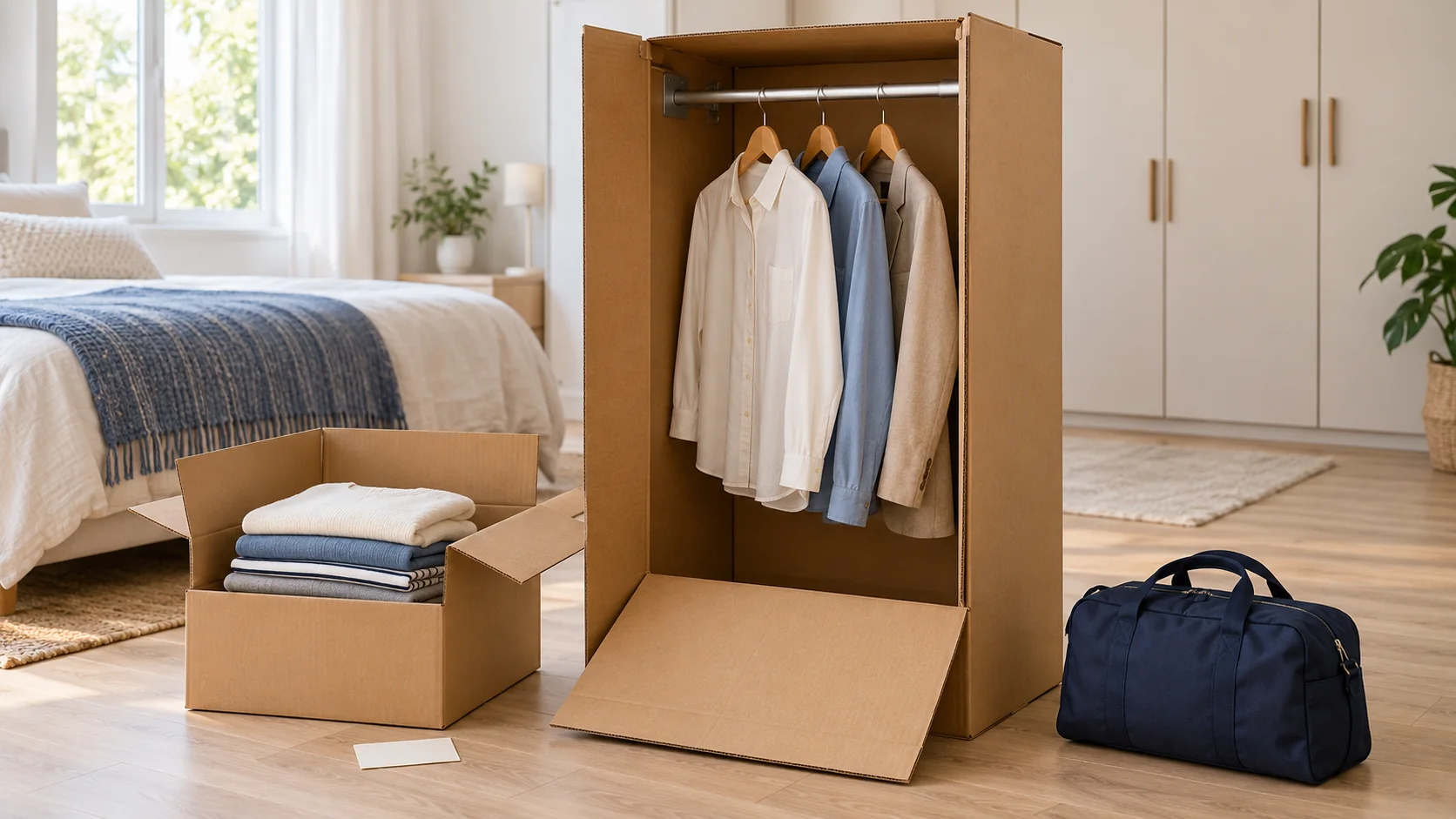
1. Sort the wardrobe before buying packaging
Start with the contents, rather than the number of wardrobe doors. Separate hanging garments, folded clothing, shoes and items needed for the journey. Out-of-season clothing can be prepared earlier. Keep workwear, school clothes and anything needed for an upcoming event accessible until an agreed point.
Decide which items are actually moving with you. Keep bags intended for other people separate from the moving load and clearly identify their purpose. Check pockets, remove detachable accessories and reunite matching items before packing. Documents, money and jewellery should not accidentally travel inside a coat pocket.
| Group | Packing option | Check before use |
|---|---|---|
| Hanging garments | Suitably sized box with a hanging rail | Garment length, hangers and box instructions |
| Folded clothing | Box or suitable closable luggage | Actual weight and closure without compression |
| Shoes and accessories | Separate labelled packaging | Pairs, cleanliness and support for shape |
2. Finish garment care and drying in advance
Read the individual care label before washing, drying or ironing. GINETEX explains what the care symbols mean. Sharing a moving box does not make one treatment suitable for every garment. If something needs cleaning shortly before departure, allow enough time to finish the process.
The Canadian Conservation Institute recommends storing textiles clean and dry. Check items before closing the packaging. Keep clothes worn until departure separate and add them to a final packing list. If they are not ready in time, arrange separate temporary packaging and deal with them on arrival.
3. Check the wardrobe box against the clothes
Before ordering, measure the longest garments together with their hangers. Compare this with the usable height below the rail in the chosen box. Check the manufacturer’s assembly method, rail attachment and load limit. Boxes sold under the same general name can have different dimensions and capacities.
Prepare one box first. Check that the hangers fit, garments have room without forced folds and the flaps close without pressure. Do not estimate the requirement from garment count alone: a bulky jacket and a thin shirt take up different amounts of room. Record the outside dimensions of the finished package when discussing carrying access and vehicle space.
Fragile vintage garments and heavily decorated pieces need individual consideration; do not assume they can hang safely. Agree a suitable packing approach with a relevant specialist before moving day. A standard wardrobe box is not a universal solution for every textile.
4. Keep folded clothing in useful groups
Group everyday clothes by person and destination. For example, connect a child’s drawer contents with that child’s new room instead of distributing them among whichever boxes have space. Choose clean packaging without protruding parts that could snag fabric. Keep footwear and items with hard fastenings apart from delicate garments.
Check the actual weight of the filled box and whether it closes normally. Do not press the lid down to fit one last pile. Suitcases and travel bags also count as packages if the mover transports them. Agree in advance whether a chest of drawers may be moved with contents inside; clothing left in drawers should not be a surprise.
If you plan to use vacuum bags, first check the instructions for both the garment and the packaging. Where compatibility is unclear, choose an option without compression. Reducing volume does not reduce the weight of the clothes, so reassess package weights and counts afterwards.
5. Count finished packages separately from garments
A box number connects the outside label to your inventory. The destination room, a brief description and opening priority are enough on the label; keep the detailed contents list with you. A label saying only “clothes” gives little direction when several bedrooms are being unloaded together.
In this illustrative example, the mover receives five packages: two wardrobe boxes, two boxes of folded clothes and one shoe box. A personal travel bag is a separate sixth package carried by its owner. This is a counting example, not a capacity allowance for a wardrobe. If the bag later joins the mover’s load, update that inventory.
| IDs | Contents | Who transports them |
|---|---|---|
| H01–H02 | Two wardrobe boxes | Mover · 2 packages |
| F01–F02 | Two boxes of folded clothes | Mover · 2 packages |
| S01 | One box of shoes | Mover · 1 package |
| P01 | Personal first-day clothing | Owner · 1 separate package |
6. Pack for the evening and next morning
Prepare a change of clothes, underwear, sleepwear and the next day’s necessities for each person. Check the weather and immediate commitments such as work, school or an appointment. These practical needs determine the contents, rather than an identical number of garments for everybody.
Keep the bag apart from the main load and identify who will take it along. Leave a short list of anything to add after its final use. If access to boxes might be delayed, adjust the contents beforehand: essential clothing should remain available while the wardrobe is being assembled.
7. Prepare somewhere to unpack
Before unloading, decide where clothing will go temporarily if the wardrobe is not assembled. A suitable stable rail or a prepared clean surface gives you an alternative to improvising with door handles. Keep boxes away from ongoing dusty work and maintain a clear route for furniture assembly and carrying.
Match delivered packages to the inventory. Open the boxes you need, check their contents and transfer the clothes to the prepared space. Record wet packaging or visible damage and contact your contractual partner. If unpacking is delayed, review the storage conditions separately: transport packaging does not establish a suitable long-term storage method.
| Situation | Prepare in advance |
|---|---|
| Wardrobe assembled and ready | Assigned spaces and clear access |
| Assembly scheduled for later | Temporary placement outside the work area |
| Items going into storage | Suitable conditions, access and packaging |
8. Agree the work with the named partner
Umzughilfen is a marketing and referral service based in Idstein for moving enquiries in the Rhein-Main region. Include package counts, tall-box dimensions, packing requirements and the readiness of the wardrobe at the new address. Send photos by a method agreed with your named contact; the enquiry form has no file upload.
The independent partner named in advance confirms materials and scope, supplies the quote, enters into the contract for the work with you, carries out the work, invoices you and receives payment. Clarify who supplies and assembles wardrobe boxes and whether unpacking is included. Umzughilfen retains its own referral and data-protection obligations. An enquiry is not yet a booking.
Questions about moving clothes
Can clothes stay on their hangers?
Yes, where the garment is suitable for hanging and the chosen box and hangers meet its size and handling needs. Special garments require individual discussion.
How many wardrobe boxes does one wardrobe need?
The number of doors does not tell you. Measure the garments, try the chosen box and refine the quantity after a packing trial.
Do suitcases belong on the moving inventory?
Yes, if they are handed to the mover. List luggage that you transport personally separately.
Can a chest of drawers travel with clothing inside?
Do not assume this is agreed. Show the furniture and contents to the mover and confirm preparation and carrying arrangements in advance.
What if the new wardrobe is not assembled yet?
Prepare temporary space outside the assembly area, keep first-day clothing accessible and agree the order of delivery, assembly and unpacking.
Sources and notes
Editorial guide dated 26 October 2026. GINETEX explains care labelling; the Canadian Conservation Institute discusses textile preservation. Selected general principles are used here, without prescribing museum packing standards for every household move. Package counts are illustrative.